
TL;DR:
- Exterior renovations in West Valley homes improve both resale appeal and energy efficiency, especially when focusing on the roof, windows, and doors. Combining high-performance materials with aesthetic design creates a cohesive look that reduces cooling costs by up to 40 percent. Prioritizing structural and functional upgrades first ensures long-term durability and maximum return on investment.
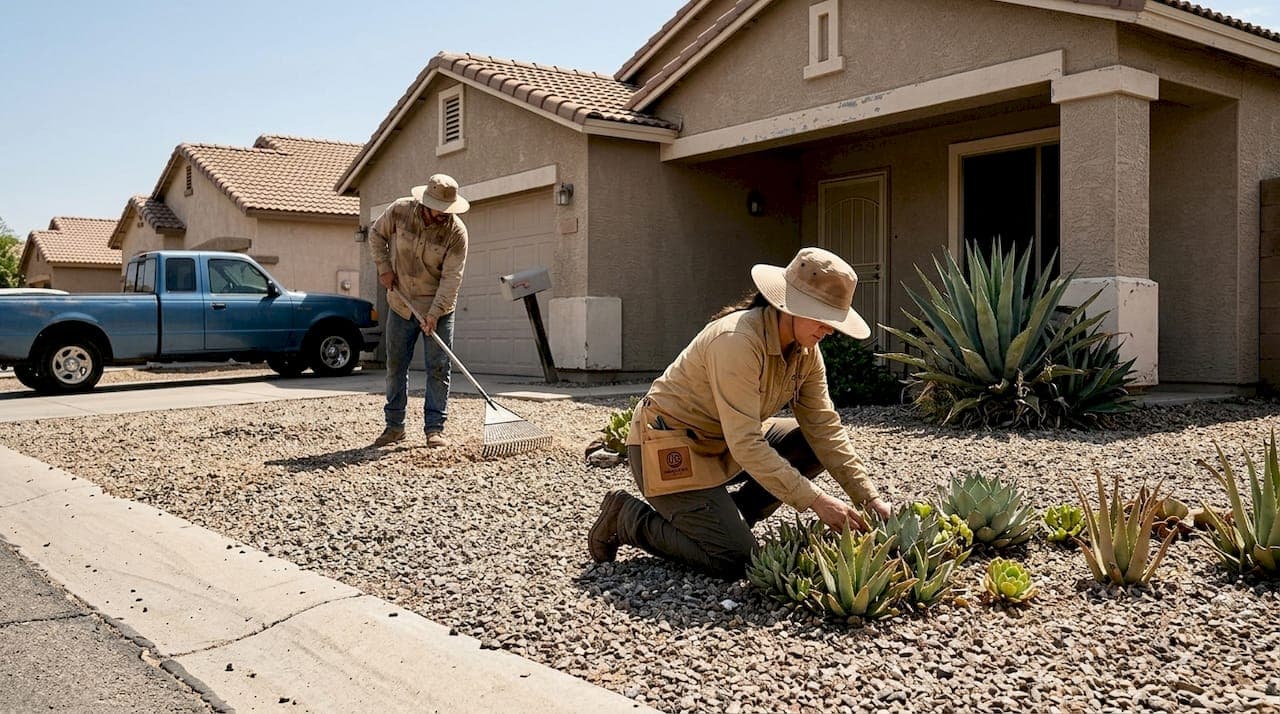
Most homeowners think a new kitchen or bathroom remodel is the surest way to boost property value. But in the West Valley, the real money is often sitting right outside your front door. Exterior renovations in Buckeye, Goodyear, and surrounding Phoenix suburbs deliver a double punch that interior upgrades rarely match: they raise resale appeal and cut the energy bills that desert living demands. When you combine curb appeal with efficiency through smart upgrades like new windows, insulated doors, and reflective roofing, homeowners regularly see 25 to 40 percent reductions in cooling costs. This guide walks you through exactly how to make that happen.
Table of Contents
- Why exterior renovations matter in the West Valley
- How exterior upgrades impact property value and energy bills
- Prioritizing exterior projects: A local homeowner's checklist
- Design meets efficiency: Getting holistic with exterior renovations
- A West Valley perspective: What most guides don't tell you about exterior renovations
- Ready to transform your home? Expert help starts here
- Frequently asked questions
Key Takeaways
| Point | Details |
|---|---|
| Desert climate focus | Using UV- and heat-resistant materials is essential for durability in West Valley homes. |
| Holistic upgrades pay off | Blending curb appeal with energy efficiency maximizes both resale value and savings. |
| Prioritize visible elements | Doors, paint, and windows offer the greatest impact for first impressions and comfort. |
| Plan projects strategically | Following a local checklist helps homeowners avoid costly mistakes and boosts results. |
| Expert help available | Partnering with experienced contractors ensures projects perform and look their best. |
Why exterior renovations matter in the West Valley
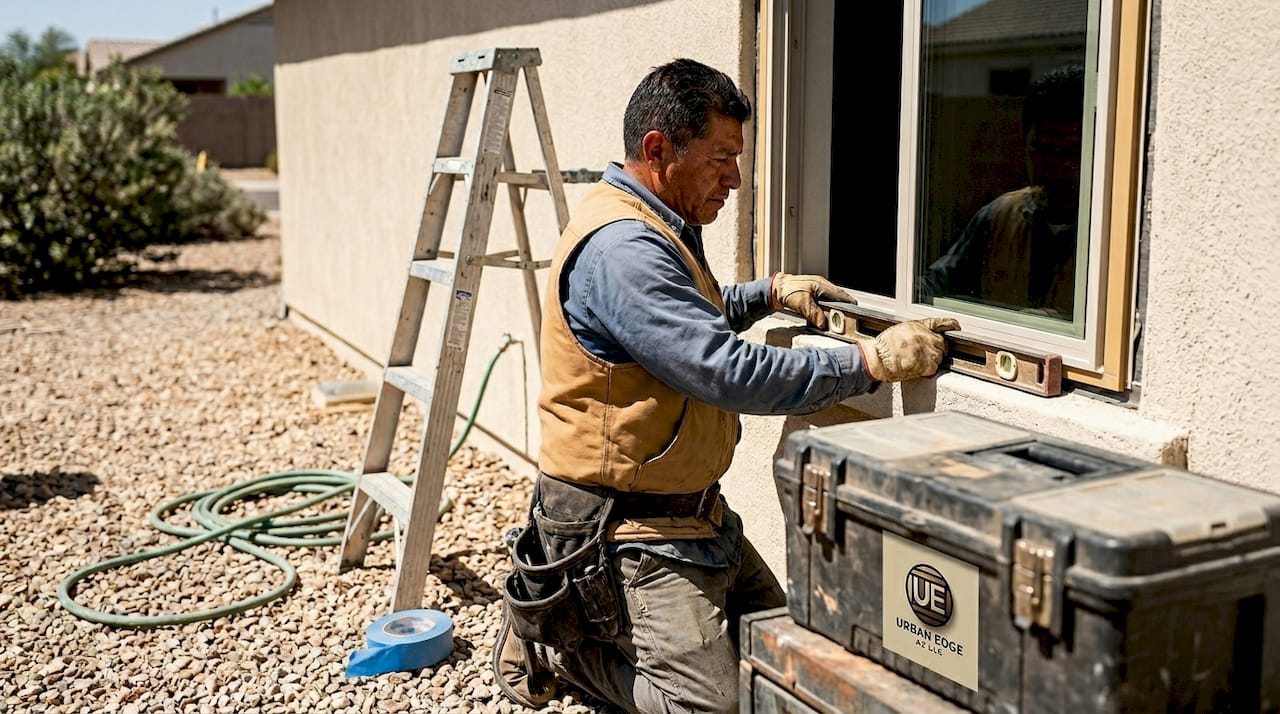
Living in the West Valley is not like living in Denver or Charlotte. Summers routinely push past 115°F. UV radiation hammers paint, caulk, and roofing materials at a rate that simply does not occur in milder climates. Then, from July through September, monsoon storms roll in fast, driving water horizontally against your walls, windows, and doors. If your exterior is not specifically built for those conditions, you are not just losing curb appeal. You are watching your home's structural integrity erode, season by season.
Understanding renovation value in Arizona starts with understanding those stressors. The exterior shell of your home is the first and most important line of defense. When it fails, the problems cascade inward. Peeling paint becomes moisture intrusion. A warped door frame becomes a broken seal. A cracked roof tile becomes a water-stained ceiling. None of those failures are cheap to fix after the fact.
Here is what the West Valley environment demands from your exterior:
- UV and heat resistance: Paint, siding, and roofing materials must be rated for extreme UV exposure. Standard exterior paint can fade or chalk within two to three years in this climate.
- Monsoon-proof sealing: Doors, windows, and roof penetrations need weatherstripping and sealants that stay flexible under dramatic temperature swings.
- Thermal mass awareness: Materials that absorb and slowly release heat can make your home feel like an oven by evening. Lighter colors and reflective surfaces matter enormously here.
- Drainage design: Flat or low-slope desert landscaping can channel storm runoff toward your foundation if grading is not correct.
"The same desert challenges that affect Phoenix apply across the West Valley. Prioritizing UV and heat-resistant materials and monsoon-proof sealing is not optional; it is the baseline."
A common misconception is that exterior renovations are purely cosmetic. In reality, a fresh coat of paint on an uninsulated exterior wall does almost nothing for energy performance. Conversely, replacing a worn front door with an insulated steel model improves security, seals air leaks, and creates a visual statement all at once. The most effective exterior projects work on multiple levels simultaneously.
Pro Tip: Focus your initial investment dollars on the elements most exposed to climate extremes, specifically your roof, windows, and any doors facing west or south. Those surfaces absorb the heaviest UV and heat load throughout the day and represent your biggest energy vulnerabilities.
Connecting with contractors who understand the key services specific to West Valley homes makes a real difference in getting materials and methods right the first time.
How exterior upgrades impact property value and energy bills
Numbers matter when you are deciding where to invest. Let us look at the actual ROI landscape for the most popular exterior upgrades, along with their energy impact in a desert climate.
| Upgrade | Avg. cost range | Typical resale ROI | Energy impact |
|---|---|---|---|
| Roof replacement (cool roof) | $8,000 to $18,000 | 60 to 75% | High: reduces attic temps significantly |
| Window replacement (low-E) | $6,000 to $15,000 | 65 to 80% | High: cuts solar heat gain by up to 50% |
| Insulated front door | $1,500 to $4,000 | 85 to 100%+ | Moderate: seals air leaks |
| Exterior paint (quality product) | $2,500 to $6,000 | 50 to 75% | Moderate with reflective finish |
| Desert landscaping/xeriscape | $3,000 to $12,000 | 50 to 70% | Moderate: shading reduces wall temps |
| Garage door replacement | $1,200 to $3,500 | 90 to 100%+ | Low to moderate |
A few things stand out in that table. The front door and garage door consistently rank among the highest ROI exterior projects in national surveys, and that holds true locally too. They are relatively affordable, highly visible, and make an immediate impression on buyers walking up to the property.
Windows are the most impactful energy upgrade on this list. Standard single-pane or older double-pane windows in a West Valley home can allow solar heat gain that forces your air conditioning to run nearly constantly during summer afternoons. Replacing them with low-emissivity (low-E) glass, which has a nearly invisible coating that reflects infrared heat, can cut that load dramatically.
A critical statistic: Holistic planning that combines curb appeal upgrades like doors and paint with efficiency upgrades like windows and insulation produces 25 to 40 percent bill reductions. If your current summer electric bill runs $400 per month, that represents $100 to $160 per month in savings. Over five years, that is $6,000 to $9,600 back in your pocket, before you even factor in resale value.
Here is where many homeowners stumble. They pick upgrades individually without considering how those upgrades interact:
- Installing beautiful new windows in a home with a worn, poorly insulated roof still leaves the attic acting like a heat sink above those windows.
- Painting the house in a fresh, modern color while ignoring crumbling weatherstripping around the windows sends mixed signals to buyers and does nothing for efficiency.
- Adding desert landscaping that is purely ornamental without considering shade placement misses the opportunity to naturally cool walls and reduce AC load.
The remodeling ROI analysis for Arizona homes clearly shows that the best results come from treating the exterior as a system, not a checklist of individual items. Every upgrade should complement the others.
Working through a thorough construction checklist before you start helps ensure you are not creating gaps between projects that end up costing you twice.
Prioritizing exterior projects: A local homeowner's checklist
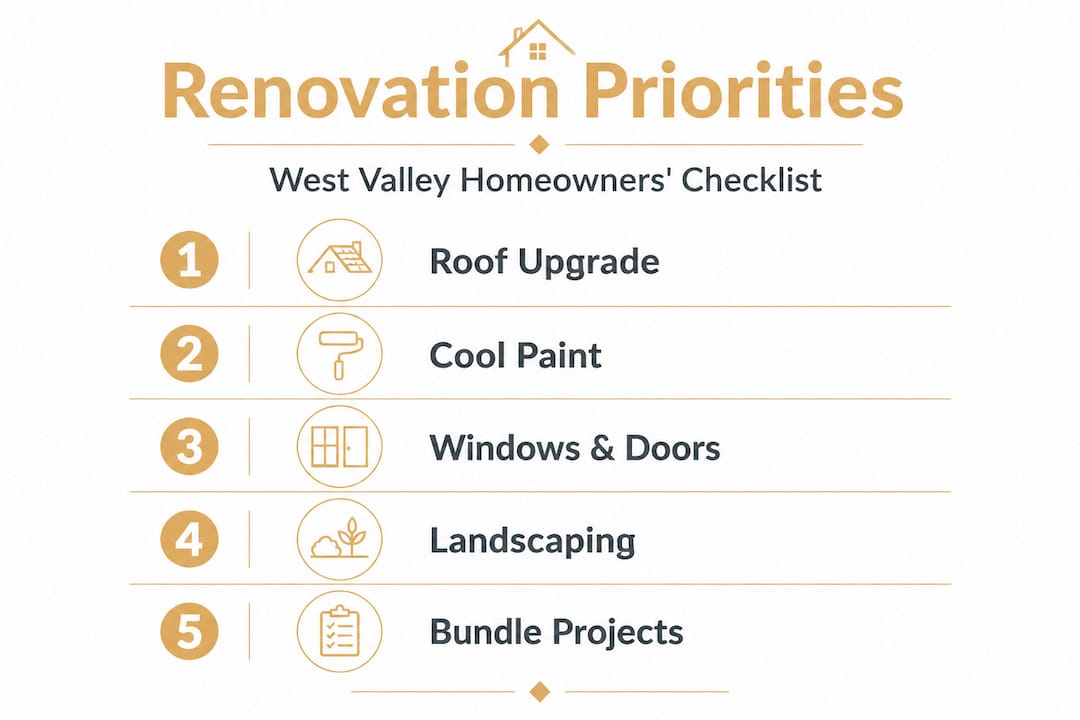
Knowing what to upgrade is only half the battle. Knowing what order to do things in saves you money and headaches. Here is a practical sequence that makes sense for West Valley homeowners.
-
Start with the roof. Nothing else matters if your roof is failing. A compromised roof allows heat and moisture into the attic, which undermines every other upgrade you install. Get a professional inspection first. If the roof has five or fewer years of useful life, replace it before doing anything else.
-
Address windows and doors next. After securing the roof, windows and doors are your biggest energy and weather vulnerabilities. These also carry some of the highest resale ROI numbers, so the investment earns its keep twice over.
-
Move to exterior paint and siding. Once the primary structural and thermal envelope is addressed, cosmetic upgrades like paint and any siding repairs create the visual transformation buyers and neighbors notice immediately. Use high-quality, UV-resistant exterior paint formulated for desert climates.
-
Upgrade landscaping and hardscaping. Desert-adapted plants, proper grading, and strategically placed shade trees or pergolas are the finishing layer. These contribute to both curb appeal and passive cooling.
-
Finish with lighting and trim details. Low-voltage LED landscape lighting, updated house numbers, and fresh trim or shutter color are low-cost, high-impact details that pull everything together.
Compare the most popular upgrades based on what matters most to West Valley homeowners:
| Project | Climate value | Visual impact | Budget friendliness | Bundle benefit |
|---|---|---|---|---|
| Roof replacement | Very high | Moderate | Low (high cost) | High |
| Window replacement | Very high | High | Moderate | Very high |
| Front door | High | Very high | High | High |
| Exterior paint | Moderate | Very high | Very high | Very high |
| Xeriscape/landscaping | Moderate | High | Moderate | Moderate |
| Garage door | Low to moderate | Very high | High | High |
Notice that the bundle benefit column is high or very high for almost every major project. That is not a coincidence. When you schedule roofing, window, and door work together with a single contractor, you reduce mobilization costs, minimize disruption to your household, and ensure that the sealing and finishing work between different systems is handled cohesively.
Staying on track means following a solid step-by-step renovation checklist from the start and understanding project sequencing so nothing gets installed out of order.
Knowing that UV and heat-resistant materials are non-negotiable for this climate, your material choices during each phase of the sequence carry extra weight. Always confirm with your contractor that specified products carry appropriate ratings for desert exposure.
Pro Tip: Bundling at least three exterior projects under one contractor agreement typically reduces your overall cost by 10 to 20 percent compared to hiring separate specialists for each job. Contractors can schedule crews more efficiently, and you avoid paying repeated setup fees.
Design meets efficiency: Getting holistic with exterior renovations
Here is where a lot of well-intentioned renovation projects go sideways. A homeowner picks beautiful new windows, then paints the house a color that clashes with the window frames. Or they install an ultra-modern front door on a home with outdated 1990s stucco and desert landscaping that has not been touched in a decade. The result looks patchy, and buyers notice.
The holistic approach means that every exterior decision you make considers both how it looks and how it performs. Those goals should reinforce each other, not compete.
The highest-impact exterior renovations blend visual upgrades with functional ones:
- Energy-smart windows in stylish frames: Low-E glass does not have to look industrial. Modern window profiles come in a wide range of colors and styles that complement Southwest, contemporary, and traditional home designs. Choose frames that match or coordinate with your front door and trim color.
- Reflective roofing in neutral tones: Cool roofs come in earth tones, charcoals, and even terra cotta shades that suit desert aesthetics perfectly. You do not have to sacrifice appearance to get the thermal performance you need.
- Stone veneer accents: Adding a partial stone veneer to the front facade creates visual texture and a sense of permanence. It also serves as an additional layer of insulation and UV protection on that section of wall.
- Shade integration: A well-placed ramada, pergola, or strategically grown shade tree does double duty as a design feature and a passive cooling tool. Shading west-facing walls or windows can reduce cooling loads on those surfaces by a significant margin.
- Cohesive color strategy: Using a three-color exterior scheme, a base, a trim, and an accent, keeps the finished look unified and intentional rather than assembled from separate decisions.
The three most common design mistakes in West Valley exterior renovations are worth spelling out clearly:
- Mismatched color schemes: Choosing paint, door, and trim colors without testing them together under Arizona's intense sunlight. Colors look dramatically different in direct sun versus shade, so always test large swatches on the actual wall before committing.
- Cheap materials chosen for upfront cost: Low-grade exterior caulk, standard-grade roofing underlayment, or entry-level window frames may save money at installation but require replacement or repair within just a few years under desert conditions.
- Ignoring shade and plantings: Treating the yard as purely decorative while missing the opportunity to use mature shrubs, trees, or structures to reduce wall and window temperatures by 10 to 20 degrees on a hot afternoon.
Holistic planning that links your visual and efficiency goals is the single most reliable way to maximize the money you put into an exterior renovation project.
Pro Tip: Before finalizing any exterior material or color selection, consult with a designer or contractor who can show you how your choices work together as a complete package. A single hour of design consultation can prevent months of regret when you realize your new door color fights with your new paint.
Understanding how interior and exterior design connect helps ensure your renovation reads as a cohesive statement inside and out, which buyers notice during walkthroughs.
A West Valley perspective: What most guides don't tell you about exterior renovations
Most renovation guides treat the desert like a footnote. They pull national ROI averages, recommend contractor bidding tips, and send you on your way. Here is what those guides miss.
The West Valley is genuinely unforgiving to substandard work. We have seen homeowners install builder-grade windows during a renovation only to replace them again five years later because the frames warped and the seals failed. We have seen beautiful exterior paint jobs turn chalky and peel within 24 months because the painter used interior-grade products or skipped primer. These are not horror stories. They are surprisingly common outcomes when the unique demands of this climate are not taken seriously.
The hidden cost of skipping high-performance materials is not just the replacement expense. It is the energy loss in the years between installation and failure. A window seal that degrades within three years means you spent three summers running your AC harder than necessary. A roof that should have been replaced gets another five years of patchwork repairs, during which heat transfer into your attic quietly raises your utility bills every single month.
Experienced local homeowners who have been through a full renovation cycle understand something important: the upfront cost difference between a standard product and a high-performance product is almost always smaller than the long-term savings and avoided repair costs. A window upgrade that costs $1,500 more than the budget option can easily pay that difference back in energy savings within two to three years while also lasting decades longer.
Here is the other truth that generic guides gloss over. Not every exterior project pays off equally, and some popular upgrades are frankly better for resale staging than for long-term value. Swimming pools, for example, are a polarizing feature in Arizona. Some buyers love them. Many buyers see maintenance costs and liability. A pool rarely returns its full installation cost at resale. Contrast that with a quality front door replacement or a cool roof installation, both of which deliver value to every future buyer regardless of personal preference.
The smartest West Valley homeowners focus first on functional performance, then on visual appeal, and they do it in a deliberate sequence. They also plan around how renovations improve overall value rather than chasing the single project with the flashiest before-and-after photos. The cumulative, systematic approach almost always outperforms the piecemeal one.
The real competitive advantage in this market is a home that looks sharp and costs significantly less to live in. Buyers who have survived a few West Valley summers know exactly what high electric bills feel like, and they will pay a premium for a home that solves that problem before they move in.
Ready to transform your home? Expert help starts here
Exterior renovations in the West Valley are too important and too climate-specific to leave to guesswork or out-of-town contractors who have never faced a 115-degree summer. Getting the sequencing right, the materials right, and the design cohesion right requires local knowledge and real project management experience.
At Urban Edge AZ, we work exclusively in the West Valley and bring hands-on expertise to every exterior project we manage, from initial roof assessment to final landscaping details. We specialize in matching energy-efficient materials with designs that actually look great in this desert environment. Whether you are planning a full exterior overhaul or starting with a targeted upgrade like windows or a front door, our team helps you prioritize, budget, and execute without surprises. Explore our local remodeling services or book a consultation to get a tailored recommendation for your home, your budget, and your goals.
Frequently asked questions
What exterior renovation gives the best ROI in West Valley AZ?
Window and door replacements, combined with efficient paint and roofing, usually deliver the highest value and energy savings in this region, especially when planned together holistically rather than as isolated projects.
Do I need special materials for the Arizona sun and monsoons?
Yes, UV and heat-resistant materials and monsoon-proof seals are critical for long-term durability and protection in the West Valley, and standard builder-grade products often fail prematurely under these conditions.
How do I balance curb appeal with energy efficiency?
Choose upgrades that serve both goals simultaneously, like low-E windows in attractive frames or modern insulated doors, since holistic planning ensures visual and functional improvements reinforce each other.
Is it better to do all renovations at once or in stages?
Bundling exterior projects can reduce labor costs and minimize disruption, though staging by priority (roof first, then windows and doors) works well when budget requires it, since coordinated upgrades almost always deliver better long-term results than scattered individual projects.