
TL;DR:
- Managing a home build or renovation in Arizona's West Valley requires careful coordination of permits, inspections, and project sequencing to prevent costly delays. A comprehensive checklist tailored to local codes, trade dependencies, and climate-specific issues ensures smooth progress from permit approval to final walkthrough. Proactive documentation, phased scheduling, and expert support help homeowners avoid common pitfalls and complete projects efficiently.
Managing a home build or major renovation in Arizona's West Valley means juggling paperwork, trade coordination, code compliance, and construction details all at once. Miss one critical step, and you could be staring down a permit rejection, a failed inspection, or a contractor rework that adds weeks and thousands of dollars to your project. This guide walks you through a master checklist covering every phase from permitting and documentation through build sequencing, inspections, and final punch list sign-off, giving you a clear, repeatable framework for keeping your project on track from day one.
Table of Contents
- Establish your permitting and documentation checklist
- Master each phase with a construction sequence checklist
- Inspection and code compliance: Avoid costly setbacks
- Punch lists and final walkthrough: Wrapping up the build
- Why most checklists fall short and how to get it right in the West Valley
- Ready for a smoother build? Get expert support for your next project
- Frequently asked questions
Key Takeaways
| Point | Details |
|---|---|
| Start with documentation | Gather all required forms, plan sets, and compliance checklists based on your jurisdiction before breaking ground. |
| Follow phase-by-phase sequencing | Manage your project using a build-phase checklist to ensure nothing is missed at each construction stage. |
| Prepare for all inspections | Anticipate mandatory inspections and organize your workflow to address code requirements early. |
| Don’t neglect the punch list | Conduct a final walkthrough and address climate-specific details before closing out your build. |
| Localize for Arizona | Supplement generic templates with Arizona-specific codes and climate considerations for a successful project. |
Establish your permitting and documentation checklist
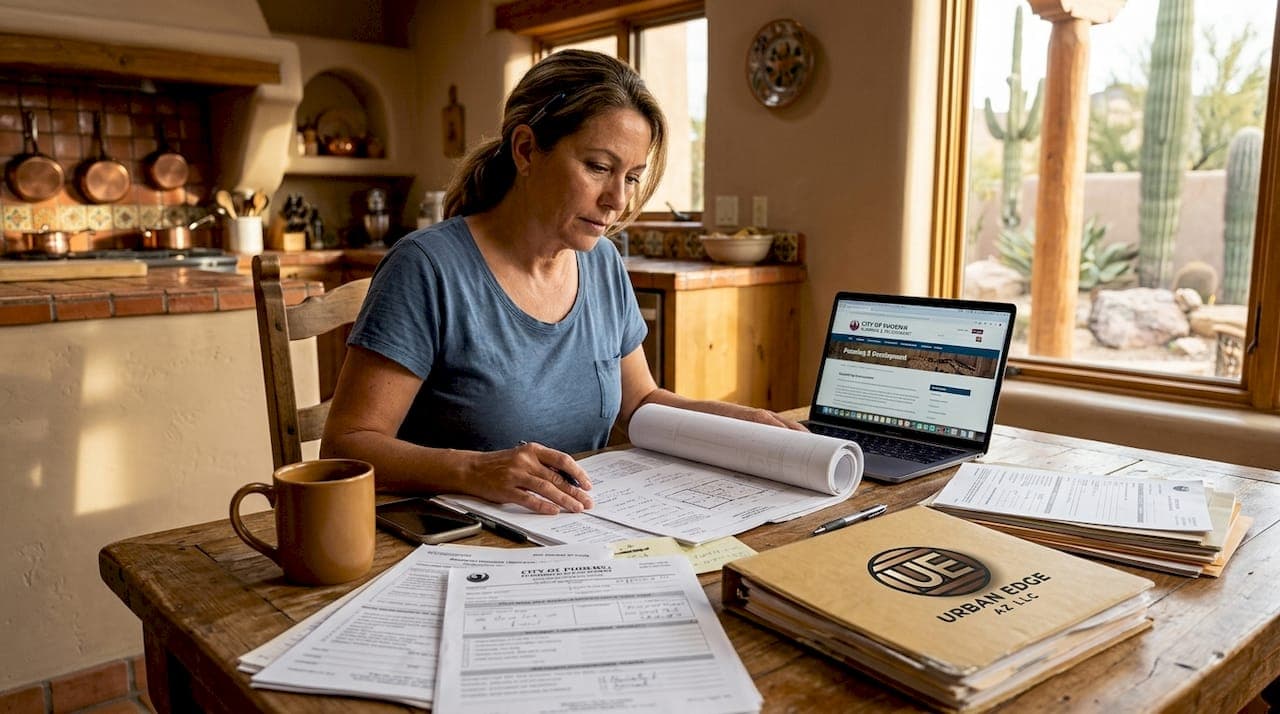
Once you've set your project vision, the first true step is getting your permitting and documents in order because nothing moves forward without approvals. Skipping or rushing this stage is the single most expensive mistake West Valley homeowners make. A rejected permit submittal doesn't just waste a few days; it can push your entire construction schedule back by weeks while you gather missing documents and resubmit.
What you need before you even set foot in a permit office:
- Completed residential construction permit application
- Minimum two full plan sets (some jurisdictions require more)
- Plot plan showing property lines, setbacks, existing structures, and zoning elements
- Energy compliance certificate (required under Arizona's current energy code)
- Fire safety and temporary fire access checklist where applicable
- RPDR (Residential Plan Design Review) checklist if required by your jurisdiction
- Soils report or geotechnical data if building on a new lot
- HOA approval letter if your property falls under a homeowners association
The City of Phoenix publishes Residential Applications and Checklists, including forms for Residential Construction Permit plan review, the RPDR checklist, energy compliance certificates, and fire protection checklists. These are not optional suggestions. They are the literal gatekeeper documents that determine whether your permit application clears the initial completeness review or gets handed back to you.
The Residential Plan Submittal plan review checklist PDF from Phoenix specifies the minimum requirements for plan submittal and review of residential construction projects, including exactly what must accompany the plan set. Print it. Work through it line by line before you submit anything.
West Valley cities like Goodyear and Buckeye operate their own planning and development departments with slightly different forms and requirements. Always verify with the specific jurisdiction before assuming Phoenix forms will be accepted. This is especially true for energy compliance, where local amendments to the state code may require additional documentation.
Pro Tip: Use the official jurisdiction checklist as your project "gatekeeper." Before any document leaves your desk, check it against the official list. Color-code each item as complete, in progress, or not started. This one habit alone prevents most initial-submittal rejections.
Reviewing AZ permitting checklists in advance can help you understand what to expect across different project types, whether you're building new or pulling a permit for a significant remodel.
Master each phase with a construction sequence checklist
With your permits secured, it's time to map out the actual construction, phase by phase, to ensure nothing falls through the cracks. Experienced contractors think in sequences, not tasks. Every trade depends on the one before it. Framing can't start until the foundation passes inspection. Drywall can't go up until mechanical rough-ins are approved. Ignoring these dependencies is how projects spiral.
Here is a numbered sequence checklist built for West Valley residential construction:
- Pre-planning and site analysis — Lot survey, soil testing, utility locates, title review
- Design and engineering — Architectural drawings, structural engineering, energy modeling
- Permitting — Full permit application submittal, completeness review, plan review, permit issuance
- Site preparation — Grading, erosion controls, temporary utilities, access road if needed
- Foundation work — Excavation, footing forms, rebar placement, pre-pour inspection, concrete pour
- Rough framing — Floor systems, wall framing, roof framing, sheathing, and weather barrier
- Mechanical, electrical, and plumbing rough-ins (MEP) — All in-wall and in-slab systems installed before concealment
- Exterior closures and roofing — Roof underlayment, flashing, tile or shingle, exterior wall cladding
- Insulation and drywall — Insulation inspection, drywall hang, taping, and texture
- Interior finishes — Flooring, cabinetry, trim, paint, tile, and millwork
- Final mechanical and systems work — HVAC equipment, electrical panel energization, plumbing fixtures, low-voltage systems
- Site work and landscaping — Final grading, hardscape, desert landscaping, irrigation
- Punch list, final inspection, and handover — Walkthrough, corrections, certificate of occupancy
A broadly structured home building checklist for new construction organizes phases exactly this way, from pre-planning through rough-ins, exterior closures, interior finishes, final mechanical work, and a punch list and handover. Following this structure keeps every subcontractor informed and prevents the common "hurry up and wait" bottleneck.
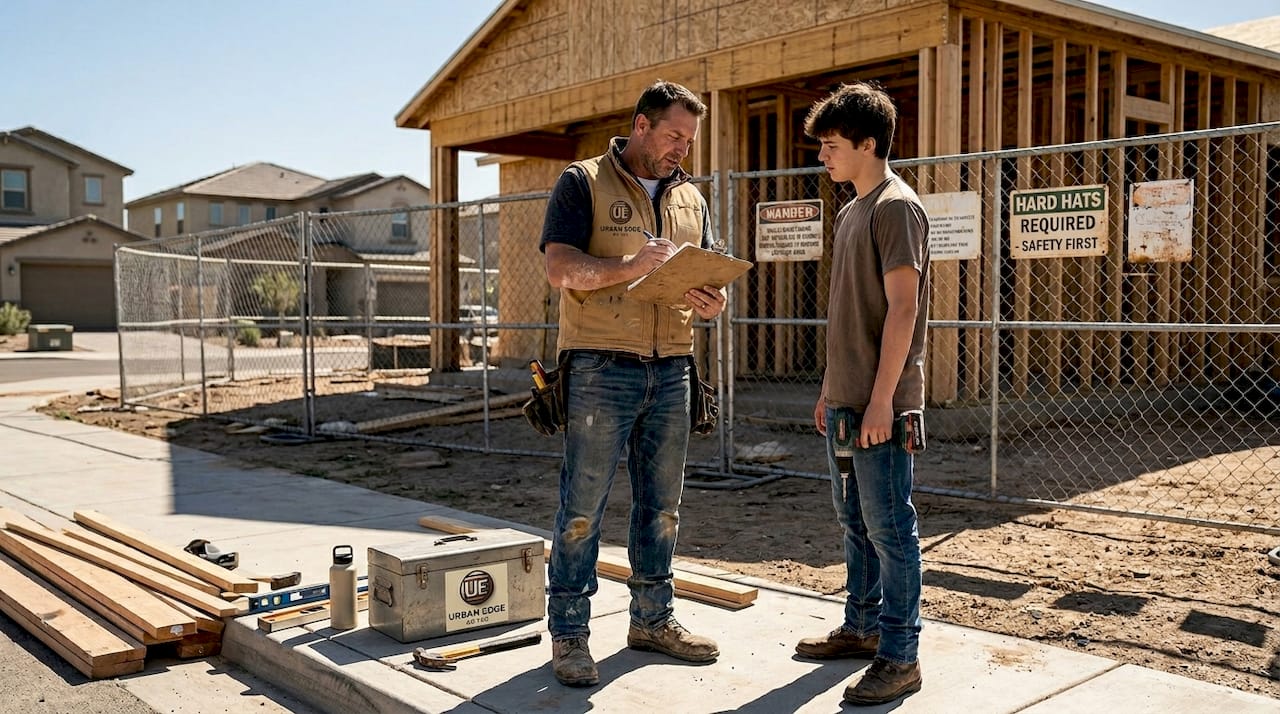
Phase milestones vs. required documentation and inspections:
| Construction phase | Key milestone | Required inspection or document |
|---|---|---|
| Foundation | Footing forms ready | Pre-pour footing inspection |
| Pre-slab | Under-slab plumbing complete | Pre-slab plumbing pressure test |
| Framing | Walls and roof framed | Framing inspection |
| MEP rough-in | All rough trades complete | Mechanical, electrical, and plumbing rough-in inspections |
| Insulation | Before drywall hang | Insulation inspection |
| Exterior roofing | Underlayment installed | Roof underlayment inspection |
| Final | All work complete | Final building inspection, certificate of occupancy |
For additions and renovations, you won't need every phase listed above. A kitchen remodel, for example, skips site prep and foundation entirely but still requires MEP rough-in inspections and a final inspection. The key is identifying which phases apply and building your checklist accordingly. A solid project management guide helps you adapt the standard sequence to your specific scope without missing any required steps.
Understanding how trades coordinate in your specific region matters too. West Valley contractor services often bundle coordination across subcontractors, which reduces the scheduling gaps that add days and dollars to your timeline.
Inspection and code compliance: Avoid costly setbacks
As your project advances through the build stages, you'll need to pass several inspections to continue. Missed details here lead to expensive delays, and in some cases, you may need to open walls or break concrete to fix a problem that could have been caught with a two-minute check beforehand.
Mandatory inspections for most West Valley residential projects:
| Inspection type | When it occurs | What inspectors typically check |
|---|---|---|
| Footing inspection | Before concrete pour | Rebar size and spacing, depth, bearing soil conditions |
| Pre-slab inspection | Before slab pour | Under-slab plumbing, vapor barrier, fill material |
| Framing inspection | After framing, before insulation | Load paths, header sizing, shear walls, fire blocking |
| MEP rough-in | After rough trades, before drywall | Pipe sizes, duct routing, wire gauge, GFCI locations |
| Insulation inspection | Before drywall hang | R-value compliance, vapor retarder placement |
| Roof underlayment | Before final roofing installed | Ice and water shield, drip edge, nail pattern |
| Final inspection | After all work complete | Everything from CO detectors to handrail heights |
Mohave County's Single Family Dwelling Inspection Checklist organizes checks by inspection phase with specific code references for each item. Even though your project may be in Maricopa County, using that reference as a cross-check builds your knowledge of what inspectors look for and why.
What causes inspection failures in Arizona? A few patterns come up repeatedly. Under-slab plumbing failures are among the most common, particularly failed pressure tests that reveal a pinhole leak before the slab is poured. That's actually the best time to find it. Missing pipe sleeves where plumbing penetrates the slab is another frequent red flag. Improper fire blocking between floors and in-wall cavities consistently fails framing inspections. And on the final inspection, missing or incorrectly placed CO detectors, incomplete handrails, and missing GFCI outlets in wet areas account for a significant share of final inspection re-dos.
Statistic spotlight: According to experienced Arizona contractors and inspectors, the majority of residential inspection failures in the Phoenix metro come down to incomplete pre-slab plumbing tests and missing fire blocking details during framing. Both are completely preventable with a phased checklist.
Pro Tip: Schedule your inspections as soon as a phase is ready, not after it. Inspection wait times in busy West Valley jurisdictions can stretch to several business days. If you wait until the last moment to call for an inspection, you add dead time to your schedule. Document every inspection result in writing and photograph the work before it gets covered.
The West Valley inspection workflow outlines how to sequence and schedule inspections in Maricopa County jurisdictions, which is particularly helpful if this is your first build in the area.
Punch lists and final walkthrough: Wrapping up the build
When construction is essentially complete, attention shifts to fine-tuning. The punch list and walkthrough ensure a comfortable, well-finished home in Arizona's tough climate. This phase is often underestimated. Homeowners eager to move in sometimes rush the final walkthrough, only to spend the first year chasing warranty repairs that would have been caught in a thorough punch-list review.
What is a punch list? It's a written record of every item that still needs to be completed, corrected, or adjusted before the project is officially closed out. The list is created during the final walkthrough and typically addressed within an agreed-upon timeframe before the homeowner signs off and releases final payment.
Arizona-specific guidance from Housing Arizona explains that punch lists in Arizona are typically created during the final walkthrough and often include checks for items that can be stressed by desert climate and temperature extremes, including HVAC performance checks, sealing and caulking, and exterior finishes. This is a critical distinction from national guidance that doesn't account for the specific stresses Arizona weather puts on a new home.
Desert-specific punch list items you should never skip:
- HVAC performance test — Run the system during the walkthrough. Confirm airflow at every register and check that the thermostat responds correctly. Arizona summers will expose any under-sized or incorrectly installed equipment within the first week.
- Exterior caulking and sealants — Inspect every penetration, window frame, and door frame for complete caulking. Extreme temperature swings in the desert expand and contract materials rapidly, and gaps that look minor now can allow moisture infiltration during monsoon season.
- Stucco and exterior finish review — Look for cracks, color inconsistencies, and areas where the scratch coat shows through. Desert UV exposure amplifies these issues quickly.
- Roof flashing and valley details — Check every transition point. Improper flashing is the leading cause of roof leaks after the first monsoon.
- Window and door operation — Open and close every window and door. Confirm they seal properly when closed. Heat expansion can cause sticking or misalignment if framing tolerances weren't held tight.
- Grading and drainage — Confirm that the final grade slopes away from the foundation on all sides. Flat spots collect water and lead to foundation issues over time.
- Touch-up paint and finish work — Arizona's bright sunlight will highlight every paint drip and uneven texture the moment you turn on a light at night.
"A thorough punch list review before move-in is your last opportunity to have defects corrected at the builder's cost. Once you accept the home and take occupancy, the burden shifts significantly."
Use the final walkthrough checklist to organize your punch list items by category, prioritize structural and mechanical items first, and document everything with photos tied to a written description. Your contractor should acknowledge each item in writing before you release any final payment.
Establish a clear contractual deadline for punch-list corrections, typically 30 days from the walkthrough date. Track each item through to completion and get a written sign-off confirming each issue was addressed.
Why most checklists fall short and how to get it right in the West Valley
Having walked through every phase, it's worth reflecting on what most sources miss and why a fully integrated approach pays off in Arizona specifically. Most homeowners search online and find a generic new construction checklist that was written for a national audience building in a mild climate. Those checklists are a starting point, nothing more.
Here's the honest issue: national checklists don't know that Arizona energy code has specific requirements around cooling loads and duct sealing. They don't account for the fact that monsoon season creates real drainage risks that a flat-lot builder in Ohio never considers. They don't mention that West Valley jurisdictions each maintain their own submittal requirements, and what flies in Goodyear may need additional documentation in Buckeye or Peoria.
The most successful projects in this region layer four things together into one integrated system. First, official jurisdiction checklists from the city or county where you're building. Second, a phased construction sequence that accounts for trade dependencies and inspection scheduling. Third, a code-aligned inspection checklist that references the specific code items your inspector will evaluate. Fourth, a desert-climate punch list that addresses the things Arizona weather tests hardest: roofing, HVAC, exterior seals, and drainage.
From our experience working across the West Valley, the homeowners who have the smoothest builds are the ones who don't treat the checklist as a formality. They treat it as a live project management tool, updated daily and reviewed in every contractor meeting. They catch issues in the pre-pour inspection instead of after the slab is down. They schedule inspections ahead of time instead of calling the day before they need one.
The practical advice is this: take every checklist template you find, including the ones in this article, and supplement them with the specific forms your city requires, the climate considerations that apply in the Sonoran Desert, and the sequence your specific contractor uses. A generic checklist adapted to your exact project and jurisdiction is worth ten times the best generic checklist used as-is.
For a deeper look at how to build this kind of integrated approach, the expert project management checklist is worth bookmarking as a working reference throughout your build.
Ready for a smoother build? Get expert support for your next project
Every phase of this checklist represents real decisions, real deadlines, and real money. Getting it right the first time is far less stressful than course-correcting after a failed inspection or a permit rejection.

Urban Edge AZ LLC works with homeowners across Buckeye, Goodyear, and Phoenix to manage every detail from the initial permit application through the final punch list sign-off. As a licensed general contractor in West Valley, we build phased project schedules, coordinate with all trades, manage inspection scheduling, and handle the documentation load so you don't have to carry it alone. Whether you're planning a full new build or a focused renovation like kitchen remodeling services, our team brings the local code knowledge and project management discipline your project needs. Reach out to book a consultation and get a clear picture of what your build timeline and checklist should look like.
Frequently asked questions
What documents are required to submit for a residential construction project in Phoenix?
You need a completed application, plan sets, a plot plan with property lines and zoning, and any necessary code or energy compliance checklists. The City of Phoenix publishes the full list of required forms, including energy certificates and fire protection checklists, on their residential applications page.
How should I organize my inspection checklist by construction phase?
Group inspections by build milestones such as foundation, framing, mechanical rough-ins, and final walkthroughs, and follow official inspection outlines for each phase. The Single Family Dwelling Inspection Checklist from Mohave County provides a well-organized, code-referenced example of how to structure this phase by phase.
When should I create a punch list during my home build?
The punch list is typically made during the final walkthrough, about a week before closing or moving in. Housing Arizona confirms that in Arizona the punch list is created at the final walkthrough and should specifically include items stressed by desert climate conditions.
Do I need different checklists for new builds versus additions or renovations?
The same overall structure applies, but smaller projects may skip certain phases like site preparation or foundation work. Always check with your city or county for specific documentation requirements, as a home building checklist for new construction is a strong baseline that you adapt rather than replace.
What's the most common reason for permit or inspection delays in Arizona?
Incomplete or missing documents during initial submittal and failing required inspections are the most frequent causes of project slowdowns. The residential building process for Phoenix describes a completeness review step where staff check your submittal before it even reaches plan review, meaning incomplete packages get returned before any technical review begins.