
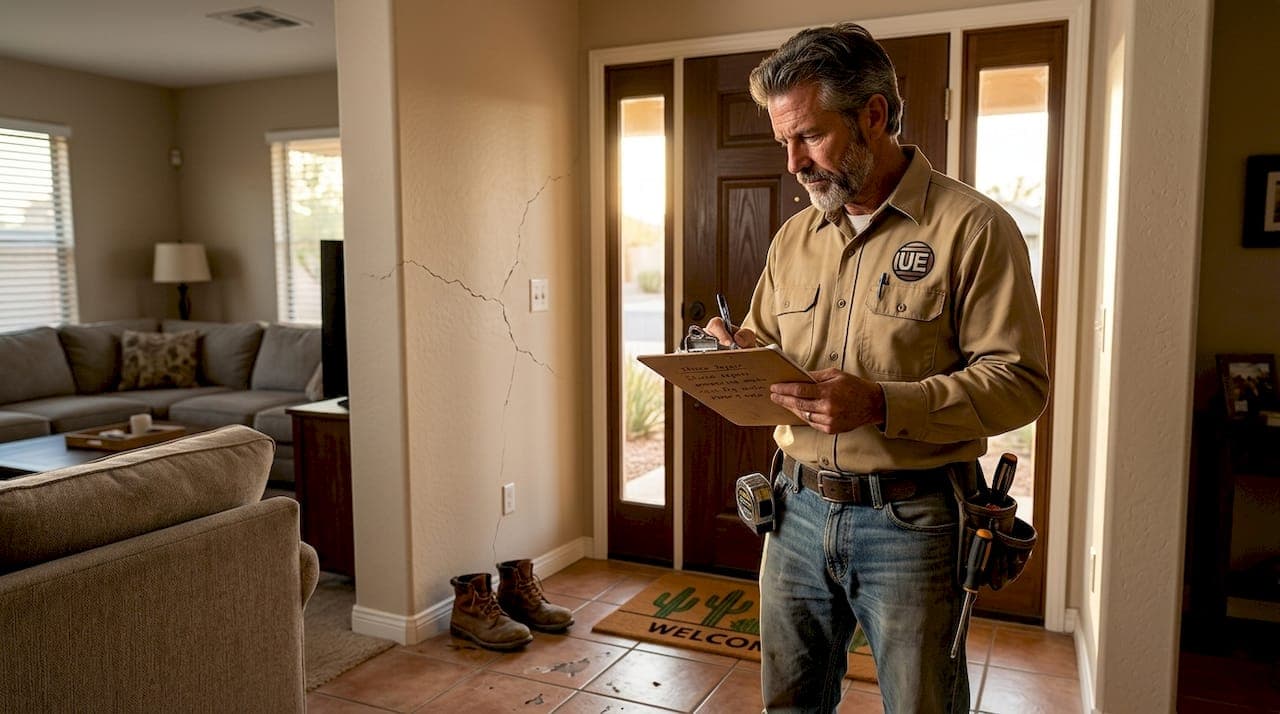
TL;DR:
- Homeowners in Arizona should use handymen for small, non-permit jobs under $1,000, but larger or permit-required projects require licensed contractors. Recognizing the scope of handyman tasks helps prevent over- or under-hiring, while building a relationship with a local trusted handyman supports preventive home maintenance. Following Arizona laws on project thresholds and permits ensures legal compliance, insurance coverage, and protects home value during resale.
You don't always need to call a licensed contractor when something breaks or wears out at home. Yet many West Valley homeowners either over-hire, bringing in a full contractor for a simple fix, or under-hire, letting an unlicensed worker handle jobs that legally require permits and credentials. Both mistakes can cost you time, money, and peace of mind. This guide cuts through the confusion by explaining exactly what handyman services cover, what Arizona law says about when a license is required, and how to find someone trustworthy for your Buckeye, Goodyear, or Phoenix home.
Table of Contents
- What is a handyman service?
- Types of tasks handymen handle for Arizona homeowners
- Handyman vs. licensed contractor: Arizona's legal guidelines
- How to choose a reliable handyman in the West Valley
- When to call a handyman versus a general contractor
- What most homeowners in Arizona overlook about handyman services
- Ready to tackle your home project? Urban Edge is here to help
- Frequently asked questions
Key Takeaways
| Point | Details |
|---|---|
| Handyman definition | A handyman is a skilled generalist handling routine repairs and small projects in your home. |
| Arizona’s legal limit | Projects over $1,000 or needing a permit require a licensed contractor instead of a handyman. |
| Task variety | Handymen can address carpentry, minor electrical, plumbing, and maintenance work efficiently. |
| Choosing wisely | Always verify experience, insurance, and project scope before hiring for best results. |
| Home improvement strategy | Use handymen for small repairs and contractors for larger remodels or complex jobs. |
What is a handyman service?
Let's begin by breaking down what a handyman service really means.
The word "handyman" gets used loosely, and that vagueness creates real confusion for homeowners trying to make smart hiring decisions. A handyman, also called a handyperson, is not a specialist. That's actually the point. A handyman is a generalist who can perform a wide range of home repair and maintenance tasks, including basic carpentry, minor plumbing, minor electrical work, and other general upkeep. They're trained to handle a little of everything, rather than mastering a single trade.
Think of a handyman the way you'd think of a family doctor versus a specialist. Your primary care doctor handles routine checkups, minor infections, and basic prescriptions. When you need open-heart surgery, you go somewhere else. Handymen work the same way. They're your first call for most everyday home problems.
The scope of a typical handyman service covers a surprisingly wide range of work. Here's what that generally includes:
- Basic carpentry: fixing squeaky doors, patching baseboards, installing trim
- Minor plumbing: replacing faucets, fixing running toilets, unclogging drains
- Minor electrical: replacing outlets, swapping light fixtures, installing ceiling fans
- Drywall repair: patching holes, smoothing surfaces before painting
- General maintenance: weatherstripping, caulking, touch-up painting
- Furniture assembly and mounting: TV brackets, shelving, pre-built cabinets
- Exterior upkeep: fixing fences, patching stucco, replacing weathered trim
"Handymen are knowledgeable individuals who are hired to perform a variety of tasks around the home, from basic carpentry and plumbing to minor electrical work and property maintenance." — Wikipedia
The key distinction between a handyman and a licensed specialist or general contractor comes down to complexity and scale. A handyman replaces a leaking faucet. A licensed plumber re-routes your water supply line. A handyman patches a ceiling after a minor water stain. A contractor opens up your roof for a structural repair. Understanding that line protects you from overpaying for simple tasks and, more importantly, from under-hiring on jobs that genuinely require licensed expertise.
Types of tasks handymen handle for Arizona homeowners
With that baseline, let's get more specific about when a handyman is the right choice for your West Valley home.
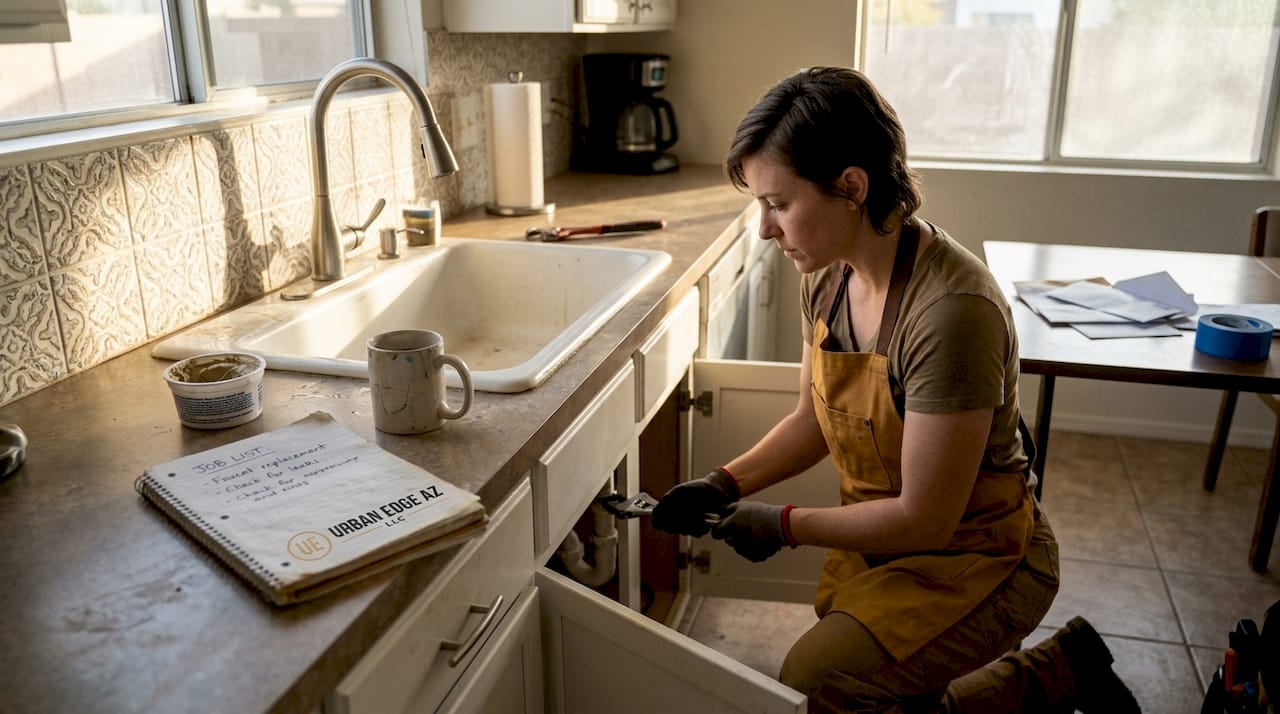
Arizona's climate adds a layer of urgency to routine home maintenance that homeowners in other states don't deal with as often. The extreme summer heat, monsoon wind and rain, and prolonged UV exposure create wear patterns that demand regular attention. Handymen in the West Valley are particularly well-suited to address these conditions as they arise.
Handymen perform both interior and exterior repair and maintenance tasks, which makes them especially versatile for Arizona homeowners facing weather-related wear. Here's a breakdown of some of the most common Arizona-specific situations where calling a handyman makes sense:
| Task category | Common Arizona examples | Estimated timeframe |
|---|---|---|
| Sun damage repair | Cracked stucco, faded trim, warped wood | 1 to 4 hours |
| Monsoon prep | Sealing windows, securing gutters, caulking gaps | 2 to 6 hours |
| Interior fixes | Patching drywall, fixing doors that stick in heat | 1 to 3 hours |
| Minor plumbing | Replacing hose bibs, fixing outdoor faucets | 1 to 2 hours |
| Exterior painting | Touch-up work on sun-bleached siding or trim | Half-day to full day |
| Fixture installation | Ceiling fans, light switches, smart home devices | 1 to 3 hours |
When Arizona's monsoon season rolls around from June through September, a handyman visit before the storms hit is genuinely smart preventive care. Loose gutters, cracked caulking around windows, deteriorated weatherstripping, and aging exterior caulk around rooflines can all let water in fast when a storm drops two inches of rain in 30 minutes. A single handyman visit in late May or early June can address all of those issues at once.
Here's a simple numbered checklist for what's worth tackling in one scheduled handyman visit:
- Walk the exterior and note anything cracked, loose, or faded
- Check all door and window seals for gaps or missing weatherstripping
- Inspect outlet covers and switch plates for damage or discoloration
- Look at ceiling fans, especially in bedrooms, for wobble or noise
- Test all interior door latches and hinges for smooth operation
- Check under sinks for signs of slow drips or moisture buildup
- Note any drywall damage or scuffs that need patching before painting
Pro Tip: Write your list before the handyman arrives and organize it by room or location (exterior, kitchen, bathrooms, bedrooms). This lets them move efficiently through your home and quote you accurately for the whole visit, rather than discovering new tasks mid-job.
It's worth knowing what handymen are typically NOT the right fit for. Large-scale remodels, full kitchen overhauls, HVAC system replacements, and major structural changes require licensed contractors and often permits. If you're weighing whether a project falls into that bigger category, checking out remodeling project ideas for Arizona homes can help you visualize the scope before you pick up the phone.
Handyman vs. licensed contractor: Arizona's legal guidelines
Once you know what a handyman does, the next logical question is when you need a handyman versus a fully licensed contractor.
Arizona has a specific legal rule here, and most homeowners have no idea it exists until something goes wrong. Total project cost exceeding $1,000 in combined labor and materials means a contractor license is required under Arizona law. That's a surprisingly low threshold. A bathroom tile repair, a fence replacement, or new exterior lighting can easily cross that line.
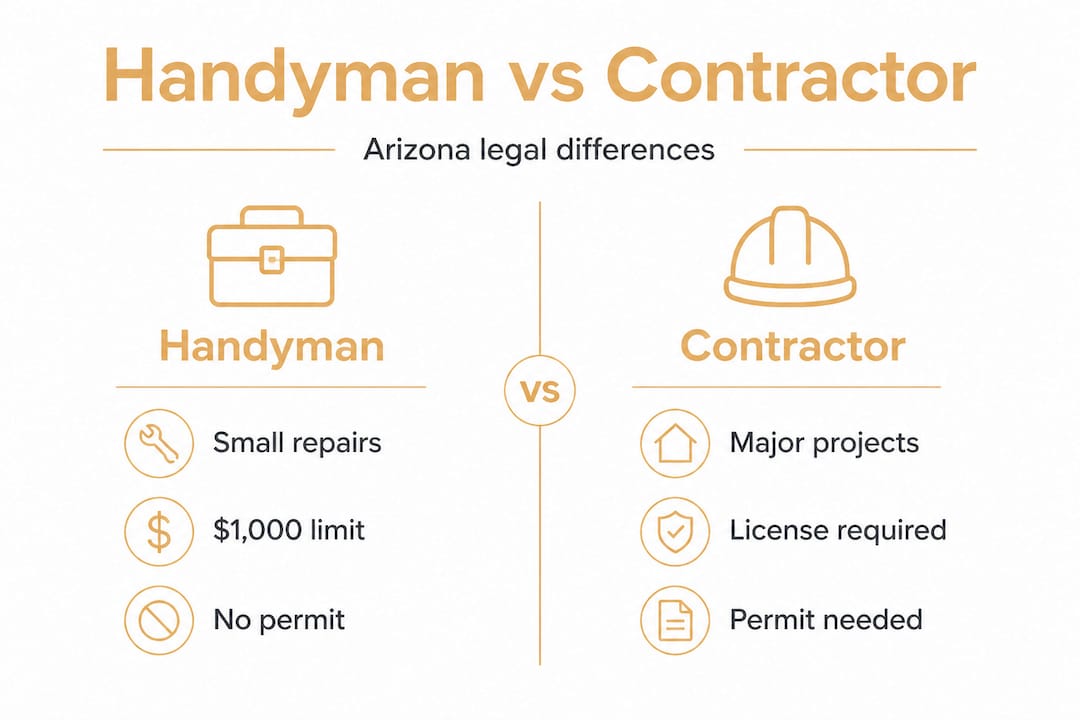
This rule isn't just a technicality. If you hire an unlicensed person for a job above that threshold and something goes wrong, your homeowner's insurance may not cover the damage. You could also face legal complications if you try to sell your home and a permitted job was done by someone without a license. The $1,000 rule is designed to protect homeowners, even when it feels inconvenient.
Here's how the two types of service compare across common scenarios:
| Factor | Handyman | Licensed contractor |
|---|---|---|
| Job size | Small to medium repairs | Medium to large projects |
| Cost threshold | Under $1,000 typically | $1,000 or more |
| Permit required? | No | Often yes |
| Insurance coverage | Varies, ask upfront | Required by Arizona ROC |
| Timeframe | Hours to one day | Days to weeks |
| Examples | Patching drywall, fixing faucets | Room additions, full remodels |
There's a second trigger that overrides the dollar amount entirely: permits. Even if a job costs less than $1,000, if it requires a permit, Arizona law says it must be done by a licensed contractor. This applies to certain electrical upgrades, structural modifications, and work that affects load-bearing elements of your home.
The consequences of ignoring these rules can be serious:
- Insurance claims related to that work may be denied
- You may be required to tear out and redo unpermitted work when selling
- An unlicensed contractor working above the threshold can face civil and criminal liability
- Your home's resale value can be affected by unpermitted improvements
Understanding Arizona contractor licensing rules can help you verify credentials before any work begins. And if you're already in the process of hiring someone for a larger job, the guidance on choosing a licensed contractor covers the key steps to make sure everything is above board.
Pro Tip: Before scheduling any home repair, write down your best estimate of total materials and labor. If you're anywhere close to $1,000, lean toward verifying the contractor's license first. It takes two minutes to check on the Arizona Registrar of Contractors (ROC) website and can save you a world of problems later.
How to choose a reliable handyman in the West Valley
Understanding the rules is only half the battle. Here's how to ensure you hire someone trustworthy and effective.
Finding a good handyman in Buckeye, Goodyear, or the Phoenix West Valley area takes a little effort upfront, but the payoff is a go-to resource you can call every time something needs fixing. Word of mouth is still the most reliable starting point. Ask a neighbor, a local Facebook community group, or your HOA for recommendations. Someone who's already done good work in your neighborhood knows the local conditions and local building norms.
Once you have a name or two, here's how to vet them properly:
- Ask how long they've been working in the West Valley specifically
- Request two or three references from recent local clients
- Confirm they carry general liability insurance (ask for a certificate)
- Ask about their experience with Arizona-specific issues like stucco, heat-related wear, and monsoon prep
- Get a written scope of work and a detailed estimate before any work starts
- Confirm payment terms in writing before the job begins
Some warning signs are worth watching for before you commit:
- They ask for full payment upfront before any work is done
- They can't provide a written estimate or avoid putting the scope in writing
- They pressure you to decide immediately without letting you review details
- They don't carry insurance or get vague when you ask
- They suggest skipping permits to save money
- Their online reviews mention unfinished work or unexpected charges
Arizona ROC guidance states that licensing is required if labor and materials exceed $1,000 or a permit is required, regardless of the total price. So even a seemingly small electrical job that needs a permit puts you in contractor territory. A trustworthy handyman will be upfront about this and refer you to a licensed professional when the job calls for it. That honesty is actually a good sign, not a disappointment.
For larger repairs or projects where you're not sure which type of professional you need, reviewing the steps for hiring contractors in Arizona gives you a solid starting framework.
Pro Tip: Request a written scope of work even for small jobs. A short written description of what will be done, what materials will be used, and what the cost covers protects both you and the handyman from misunderstandings when the job is done.
When to call a handyman versus a general contractor
Even with great advice, there are moments of doubt when faced with a new repair or upgrade. Here's a simple way to choose confidently.
The decision usually comes down to three factors: the total cost, whether a permit is involved, and whether the work requires a licensed trade skill like structural engineering or complex electrical systems. When total project cost exceeds $1,000 including both labor and materials, Arizona law puts you firmly in contractor territory.
| Scenario | Right choice | Reason |
|---|---|---|
| Patching and painting one interior wall | Handyman | Under $1,000, no permit needed |
| Replacing a ceiling fan | Handyman | Simple electrical, no permit required |
| Fixing a dripping faucet | Handyman | Minor plumbing, no permit |
| Adding a bathroom from scratch | General contractor | Permits required, complex trades involved |
| Installing new kitchen cabinets throughout | General contractor | Likely over $1,000, may involve plumbing and electrical |
| Replacing an exterior door | Handyman | Under $1,000 if straightforward |
| Building a room addition | General contractor | Structural work, permits mandatory |
| Repairing stucco on one wall | Handyman | Cosmetic repair, under $1,000 |
Here's a quick mental checklist to use before you make the call:
- Will the total cost (labor plus materials) exceed $1,000?
- Does the job require opening walls, moving plumbing, or touching electrical panels?
- Will the city or county require a permit for this work?
- Does the project involve structural components like beams, foundations, or load-bearing walls?
- Is this part of a larger renovation rather than an isolated repair?
If you answered yes to any of those questions, you're likely looking at licensed contractor territory. Understanding what general contractors do in Arizona can clarify which projects fall under their scope and help you frame the conversation when you reach out for a quote.
What most homeowners in Arizona overlook about handyman services
Here's something we see regularly working with West Valley homeowners: the biggest mistakes don't happen because people hire the wrong person. They happen because people wait too long to hire anyone at all.
A small crack in your stucco, if left alone through a summer and a monsoon season, becomes a water intrusion problem. A wobbly ceiling fan that nobody fixes eventually damages the mounting box in the ceiling. A slow bathroom drain that gets ignored becomes a full blockage that backs up into the floor. These are not dramatic stories. These are exactly what happens to well-maintained homes when small repairs get pushed down the priority list.
Here's the uncomfortable truth: skilled handymen are one of the most underused assets in preventive home maintenance. Most homeowners call a handyman reactively, after something has already failed. The smarter approach is to schedule a seasonal visit, quarterly or twice a year, so someone with trained eyes walks through your home and flags what's starting to wear before it becomes an emergency.
The hidden financial cost of misclassifying your repair needs is also real. Homeowners who hire a handyman for a job that legally requires a licensed contractor aren't just bending a rule. They're potentially voiding their homeowner's insurance, creating liability if a worker gets hurt on their property, and building up a backlog of unpermitted work that can delay or kill a home sale years later.
On the flip side, over-hiring is a real problem too. We've seen homeowners call in a licensed general contractor, complete with full permit process and project management overhead, for repairs that a skilled handyman could have completed in a single afternoon. That costs you significantly more money and a lot more time.
The real value of building an ongoing relationship with a trusted local handyman in the West Valley is preventive leverage. Someone who knows your home, knows what was fixed last time, and can spot the early signs of the next problem is genuinely worth finding and keeping. It's not a transaction. It's more like a maintenance partnership, and it pays off quietly every year in repairs you never had to scramble to fix.
For projects that do grow beyond handyman scope, having general contracting guidance ready means you already know where to turn without starting from scratch.
Ready to tackle your home project? Urban Edge is here to help
Bringing together all you've learned, see how you can get trustworthy help for any size project, from simple repairs to major remodels.
At Urban Edge AZ LLC, we work with West Valley homeowners at every stage of home improvement. Whether you're trying to figure out if a repair needs a permit, planning a kitchen overhaul, or exploring what a full remodel looks like, we're here to give you honest, experienced guidance.

Our team serves Buckeye, Goodyear, and Phoenix with licensed general contracting in Arizona services, full project management, and remodeling expertise built for the local climate and local standards. If your project has grown beyond a handyman repair, or you're ready to invest in your home with a bigger renovation, our kitchen remodeling services and broader remodeling portfolio are a great place to start. Reach out for a consultation and let's figure out the right path forward for your home.
Frequently asked questions
Do Arizona handymen need to be licensed for small repairs?
No license is required for handyman jobs under $1,000 in labor and materials that don't require a permit. Once either threshold is crossed, a contractor's license becomes mandatory under Arizona law.
What types of home repair can a handyman legally do?
A handyman can legally handle basic carpentry, minor plumbing, minor electrical work, and most general maintenance tasks that don't require permits or exceed the $1,000 cost threshold.
When do I need to hire a licensed contractor instead of a handyman?
Any project where labor and materials exceed $1,000 or a permit is required must be handled by a licensed contractor, regardless of the apparent simplicity of the job.
Are handymen insured for accidental damage or injury?
Reputable handymen typically carry general liability insurance, but coverage varies. Always ask for proof of insurance before any work begins to protect yourself from liability.
Can a handyman help prepare for Arizona's weather challenges?
Absolutely. Handymen regularly assist with interior and exterior maintenance tasks like weatherproofing, stucco repair, monsoon prep, and fixing sun-related wear that Arizona's climate causes year-round.