
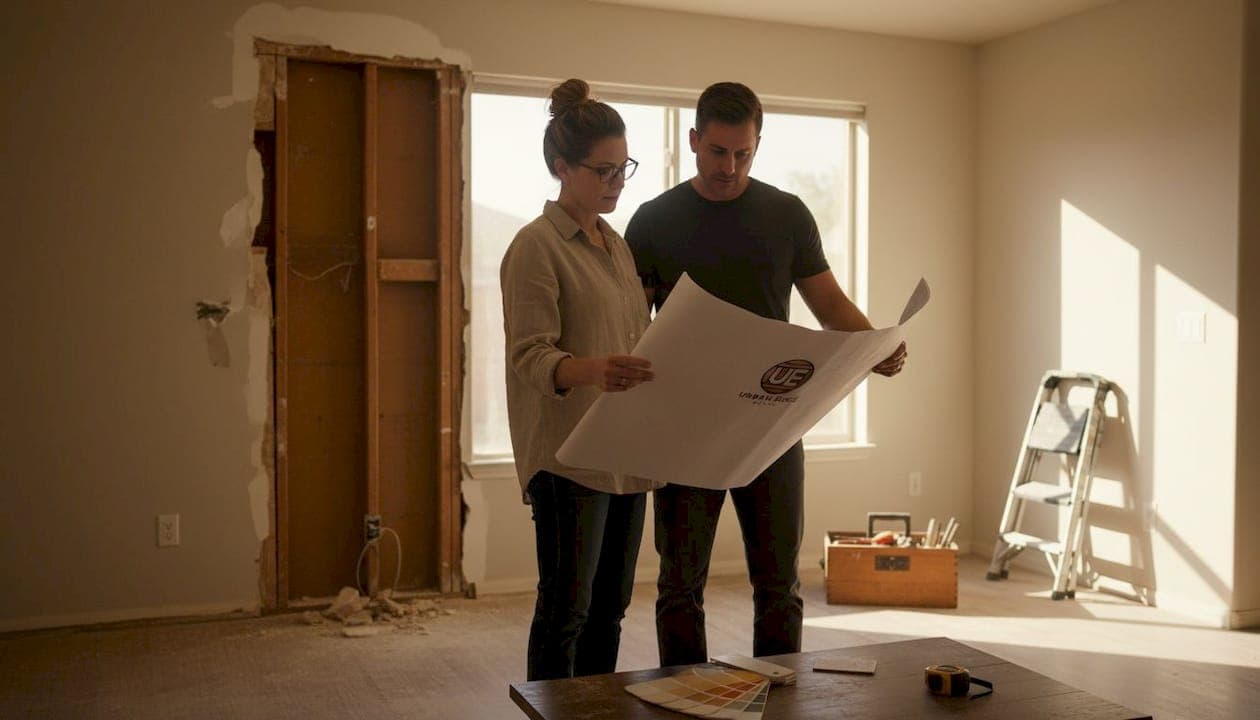
TL;DR:
- Interior designers influence layout, flow, and structural elements early in remodeling to prevent costly mistakes.
- Engaging a designer before finalizing plans keeps projects on budget and enhances functionality.
- Early design input solves spatial, climate, and future-proofing issues specific to Arizona homes, ensuring cohesive results.
Most homeowners in Buckeye, Goodyear, and Phoenix assume that interior designers show up near the end of a remodeling project to pick out paint colors and throw pillows. That assumption costs people thousands of dollars and months of frustration every year. Interior designers integrate early in remodeling to shape layout, flow, and functionality far beyond aesthetics, working alongside architects and contractors on millwork, cabinetry, lighting, and structural elements before a single nail is driven. This guide breaks down exactly what designers do, when to involve them, and how their early input can save your Arizona remodel from the most common and most expensive pitfalls.
Table of Contents
- What interior designers really do in a remodeling project
- Why timing matters: Engaging designers early vs. late
- How interior designers add value beyond aesthetics
- Steps to integrate interior design into your remodeling process
- What most people miss about interior design's role in remodeling
- Ready to remodel with interior design expertise on your side?
- Frequently asked questions
Key Takeaways
| Point | Details |
|---|---|
| Early design matters | Bringing in an interior designer at the start avoids costly mistakes and creates a more functional space. |
| Value beyond looks | Interior designers solve layout, workflow, and future-proofing challenges—not just style. |
| Teamwork counts | Designers work with contractors and architects to deliver cohesive, high-quality remodeling results. |
| Process for success | Following a structured process with design input at every stage leads to smoother remodels and fewer regrets. |
What interior designers really do in a remodeling project
With that initial misconception addressed, let's clarify what interior designers actually do when you're remodeling your home.
A lot of people confuse interior designers with interior decorators. They are not the same thing. Decorators work with furnishings, textiles, and accessories after construction is complete. Designers, on the other hand, get involved at the structural level. They influence how a room is laid out, where walls go, how natural light flows, what materials go into the framework of your space, and how traffic moves from one room to another.
Think of it this way. If your contractor is building the shell of a remodel, a designer is thinking about how every person in your household is going to live inside it. They're asking questions your contractor won't: Where does the morning sun hit your kitchen counter? Will these two rooms feel connected or cut off? Does this layout make sense for how your family actually moves through the house?
Here's a breakdown of what an interior designer typically handles during a remodel:
- Layout and spatial flow: Mapping how rooms connect and how traffic moves through the space, especially relevant in open-concept remodels popular across West Valley homes
- Millwork and cabinetry placement: Deciding where built-ins, cabinets, and custom woodwork go before any framing or installation begins
- Lighting plans: Designing layered lighting (ambient, task, and accent) as part of the structural phase, not as an afterthought
- Material selection tied to function: Choosing surfaces that hold up to Arizona heat, UV exposure, and dust, not just surfaces that look good in a magazine
- Coordination with contractors and architects: Translating design intent into construction documents and specifications the build team can follow
"Interior designers integrate early in remodeling to shape layout, flow, and functionality beyond aesthetics, collaborating with architects on millwork, cabinetry, lighting, and structural elements before construction begins." — House Beautiful
That last point matters most for Arizona homeowners. In the West Valley, where remodeling projects often involve extending outdoor living spaces, adding casitas, or opening up floor plans built in the 1990s, a designer's remodeling expert guidance keeps every trade working toward the same vision. Without it, you end up with a beautiful tile floor that clashes with a ceiling height nobody planned for.
Why timing matters: Engaging designers early vs. late
Now that you know designers do more than decorate, it's crucial to understand when to bring them in for maximum impact.
The single biggest factor in whether a remodel comes in on budget and on vision is when the designer joins the project. Most homeowners make the mistake of waiting until after they've already committed to a floor plan, chosen a contractor, and sometimes even started demolition. At that point, the designer is reactive rather than proactive, and every great idea they have comes with a change order attached.
Up to 39% of remodels exceed budget when designer engagement is delayed. That's not just a small cost spike. A kitchen remodel in the Phoenix metro with a median spend around $24,000 can balloon well past $33,000 once you start undoing decisions made without design input. For major kitchen renovations in larger homes, median remodel spending tops $55,000, where the margin for error is even smaller.
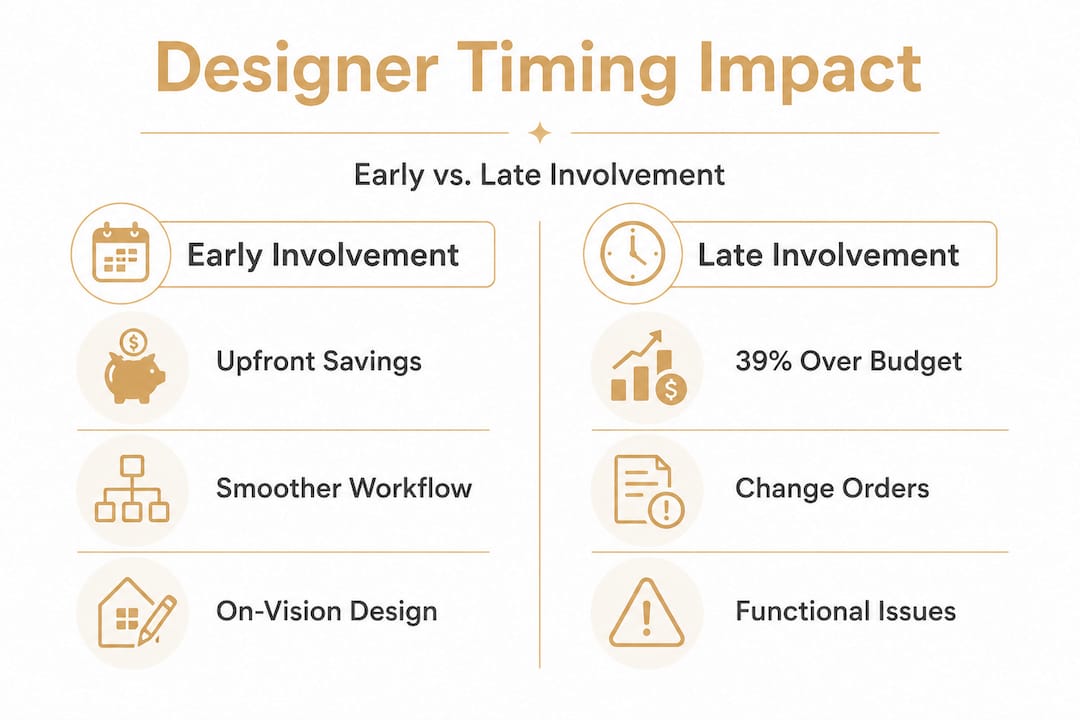
Here's a clear comparison of what early versus late designer involvement looks like in practice:
| Factor | Early designer involvement | Late designer involvement |
|---|---|---|
| Layout decisions | Made with design intent from the start | Often locked in before designer arrives |
| Change orders | Minimal, resolved in planning phase | Frequent, costly, and disruptive |
| Budget adherence | Higher likelihood of staying on target | Budget overruns common |
| Material cohesion | All finishes selected as a unified system | Piecemeal choices that may clash |
| Construction surprises | Addressed before they become crises | Handled reactively, causing delays |
| Final result | Cohesive, functional, purposeful | Visually fragmented or poorly flowing |
Late involvement doesn't just hurt the budget. It creates spaces that feel off in ways that are hard to pinpoint. You walk into a remodeled kitchen and something doesn't sit right. Maybe the island is slightly too large. Maybe the lighting creates shadows in the wrong places. Maybe the transition from the kitchen to the dining area feels abrupt. These are layout and spatial flow problems, and they can't be fixed with new throw rugs.
For contractor hiring red flags and common timeline mistakes, knowing this pattern up front saves you from repeating it.
Pro Tip: Always finalize your layout and functional goals before choosing any finishes, fixtures, or furniture. It's tempting to fall in love with a tile or a cabinet color first, but those decisions should come after the bones of the space are locked in. Finishes serve the layout, not the other way around.
How interior designers add value beyond aesthetics
We've established that early engagement is critical, so what unique benefits do designers bring to your remodel that go far beyond style?
The most overlooked value of a good interior designer is problem-solving. Not visual problem-solving, but spatial and structural problem-solving. Take the kitchen work triangle as an example. This is the concept that your refrigerator, sink, and stove should form a triangle with each leg measuring between four and nine feet. When this triangle is optimized, cooking is efficient and the kitchen doesn't feel like a maze. When it's ignored, even a beautifully finished kitchen becomes exhausting to work in. Kitchen layout prioritization is one of the most critical elements designers address before aesthetics even enter the conversation.
Here's where Arizona homeowners have specific needs that generic design advice doesn't cover. West Valley homes face intense heat, direct afternoon sun, and dust. A designer planning a remodel here thinks about which walls should carry insulation upgrades, where to position windows to avoid solar heat gain in summer, and which materials hold up to the expansion and contraction that comes with 115-degree summers and cool desert winters. These aren't decorating decisions. They're engineering-adjacent ones that happen at the design phase.
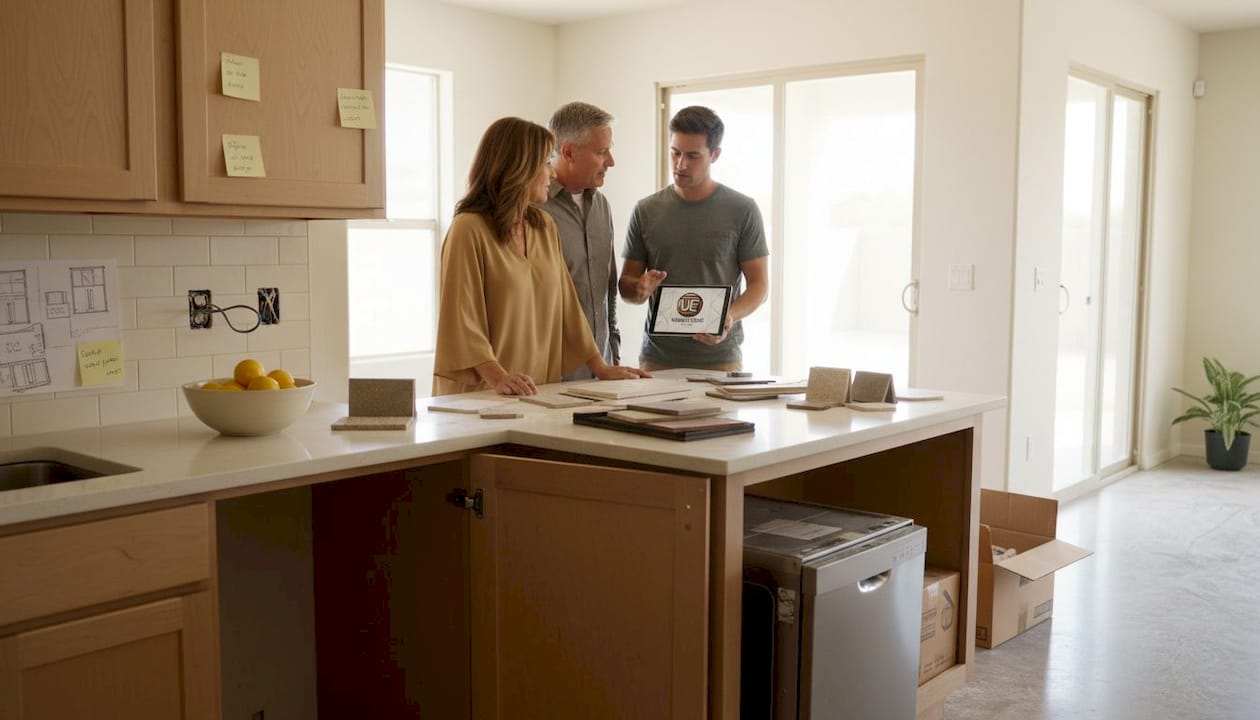
The following table shows the most common problems that designer involvement prevents, and the real cost when they're missed:
| Problem | What causes it | Designer's solution | Cost if missed |
|---|---|---|---|
| Poor kitchen workflow | Appliances placed without layout planning | Work triangle optimization before framing | $5,000+ in cabinet relocation |
| Inadequate task lighting | Lighting treated as decoration | Lighting plan integrated with electrical rough-in | $3,000+ to rewire post-construction |
| Awkward room transitions | Spaces planned in isolation | Unified flow mapped across rooms early | Ongoing functional dissatisfaction |
| Wrong material for climate | Finishes chosen for looks alone | Climate-appropriate specs from the start | Premature wear, replacement costs |
| Wasted square footage | No spatial planning before demo | Room-by-room use mapping in planning phase | Lost livability in every room |
Another major value is future-proofing. Many West Valley homeowners are remodeling spaces they plan to live in for decades. A designer helps you plan rooms that adapt. That spare bedroom might become a home office in two years. That open flex space might need to serve as a multigenerational living area. Designers build this flexibility into the layout itself, not just the furniture arrangement.
There's also the matter of on-site surprises. Old homes in Phoenix and Buckeye regularly reveal uneven walls, odd structural elements, and previous renovations done without permits. A designer who is engaged early and present during construction can make foundational remodeling issues work in your favor rather than against you. They adapt the design in real time instead of forcing decisions that lead to costly backtracking.
The principle here, as designers who focus on livable luxury describe it, is fixing the bones before worrying about the surface. Millwork, lighting structure, and spatial organization are the bones. No amount of premium tile covers up a room that doesn't function.
Pro Tip: Before you select a single finish, walk through your current space and list every frustration you have with how it works. Bad drawer placement? No natural light at the counter? Traffic jams near the stove? Give that list to your designer before they touch a floor plan. Those lived-in frustrations are the most valuable input you can provide.
Key benefits of early interior designer involvement at a glance:
- Spatial flow that matches how your family actually lives
- Materials selected for both function and Arizona climate durability
- Lighting that works for everyday tasks, not just photos
- Layouts that prevent expensive retrofits later
- Future-proofed rooms that adapt as your needs change
- Real-time problem-solving when construction reveals surprises
Steps to integrate interior design into your remodeling process
Understanding the value is important, but here's how you can put it into action for a smoother, more successful remodel.
The following process works for kitchens, bathrooms, whole-home remodels, and room additions across the West Valley. Follow it in sequence and you'll avoid the vast majority of problems that cause Arizona remodels to go over budget and over schedule.
-
Reach out to a designer before you finalize scope or hire a contractor. This sounds counterintuitive to homeowners who think they need a contractor first, but designers and contractors need to work in tandem from the start. Your designer will inform what the contractor needs to price and build. Interior designers collaborate on layout, cabinetry, lighting, and structural elements before construction even begins, which means they need to be in the room when scope is set.
-
Map out your goals as a lifestyle brief. Before any drawings are made, document your lifestyle needs in detail. How many people cook in the kitchen at once? Do you work from home and need a quiet, dedicated space? Do you have aging family members whose mobility should influence layout? Are there Arizona-specific concerns, like an outdoor kitchen or a shaded indoor-outdoor transition area? The more specific you are, the more targeted the design will be.
-
Let the designer and contractor work together on the structural plan. Once your lifestyle brief is in place, your designer creates or reviews the layout plan in coordination with your contractor. This is where millwork placements, lighting rough-in locations, plumbing positions, and wall configurations get locked in. Changes here cost far less than changes made during or after framing.
-
Approve layouts before selecting any finishes. This is the step most homeowners skip. They get excited about a quartz countertop or a specific tile and start ordering before the layout is confirmed. Do not do this. Wait until your floor plan and spatial layout are fully approved. Then choose your finishes within that confirmed framework. Everything should flow from the layout, not toward it.
-
Schedule regular check-ins during construction. Even the best plans meet reality on a job site. Old construction, unlevel floors, and hidden plumbing surprises happen regularly in West Valley homes built in the 1980s and 1990s. Regular check-ins between you, your designer, and your contractor keep the design intent intact when the unexpected happens. These don't need to be long, but they need to be consistent.
-
Save paint, furniture, and décor for last. The final stage is where most people think the design begins. In reality, it's where everything gets layered onto the foundation that was built in steps one through five. When the bones are right, this stage is fast, enjoyable, and rarely results in costly do-overs.
For homeowners in Buckeye, Goodyear, and Phoenix ready to begin, connecting with a team that offers integrated remodel services from planning through finishing is the most efficient way to follow this process without managing multiple separate professionals.
What most people miss about interior design's role in remodeling
With a step-by-step process in hand, let's pause and consider what often gets overlooked when planning a remodel.
Here's an honest observation from years of working on West Valley remodels: the homeowners who end up most frustrated with their projects are not the ones who ran out of money or picked the wrong tile. They're the ones who treated design as optional until it was too late to matter.
Conventional wisdom says design is about finishes. Pick the right countertop, the right backsplash, the right fixtures, and your remodel is a success. But that thinking confuses the skin of a project with its skeleton. The most costly mistakes we see in residential remodeling, whether budget overruns, uncomfortable layouts, or rooms that simply don't work, almost always trace back to skipping the planning phase that a designer would have led.
Here's what the data says plainly: 39% of remodels exceed budget when designer engagement is left until the end or skipped entirely. That's not a small minority. It's nearly four out of ten homeowners watching their renovation cost spiral in ways they weren't prepared for. And most of them couldn't identify exactly where it went wrong, because the root cause was a decision made or not made months earlier.
Designers are not a luxury. They are risk management. They solve two categories of problems simultaneously: technical ones (where does the ductwork go if we remove this wall?) and lifestyle ones (will this layout actually make daily life better for your household?). No contractor, no matter how skilled, is paid to think that way. Contractors execute. Designers plan.
The homeowners who engage remodeling and design experience early in their projects rarely talk about regret. They talk about the kitchen that finally works the way they always wanted, the bathroom addition that makes the house feel twice as large, or the open floor plan that brought their family together. That's not luck. That's the result of getting the right expertise involved before the concrete was poured.
Our honest advice: stop thinking of the designer's fee as an added cost. Think of it as an investment in not having to redo the parts that matter most.
Ready to remodel with interior design expertise on your side?
Empowered with new knowledge, you're ready to make the best decisions for your remodel. Here's how to connect with the right local expertise.
Urban Edge AZ LLC brings together general contracting and integrated interior design services specifically for West Valley homeowners. We know Buckeye, Goodyear, and Phoenix homes inside and out, literally. Our team works with you from the first layout conversation through the final finishing touches, so nothing falls through the cracks between design intent and what actually gets built.
Whether you're planning a full kitchen transformation with our kitchen remodeling experts, building a new space from the ground up with our custom home builders, or exploring what's possible for your existing home, we're ready to walk through every step with you. Browse real Arizona projects in our home remodel portfolio to see how design-driven construction actually looks in the West Valley. Reach out today for a no-obligation consultation and let's talk about what your remodel should accomplish, functionally first, beautifully always.
Frequently asked questions
Is it necessary to hire an interior designer for a remodeling project?
While not mandatory, hiring a designer early significantly reduces the chance of costly mistakes, since early involvement prevents budget overruns and ensures your finished space looks and functions cohesively.
When should I bring an interior designer into my remodel?
Bring a designer in during the planning phase, before you select a contractor or finalize scope, because designers shape layout and functionality from the start, which is where the most impactful decisions are made.
How do interior designers work with contractors and architects?
Designers coordinate directly with contractors and architects on layout, structural elements, lighting plans, and material specifications, as collaboration on millwork and cabinetry happens before construction ever begins.
Does hiring an interior designer increase remodeling costs?
There's an upfront fee, but designers typically reduce overall costs by eliminating expensive mid-project changes, since preventing change orders alone can save far more than the designer's original fee.