
TL;DR:
- Residential construction in Arizona involves specific phases, permits, and codes distinct from remodeling.
- Homeowners should carefully consider permits, local regulations, and design choices to avoid costly mistakes.
- The choice between remodeling and new construction depends on budget, condition, and desired outcomes.
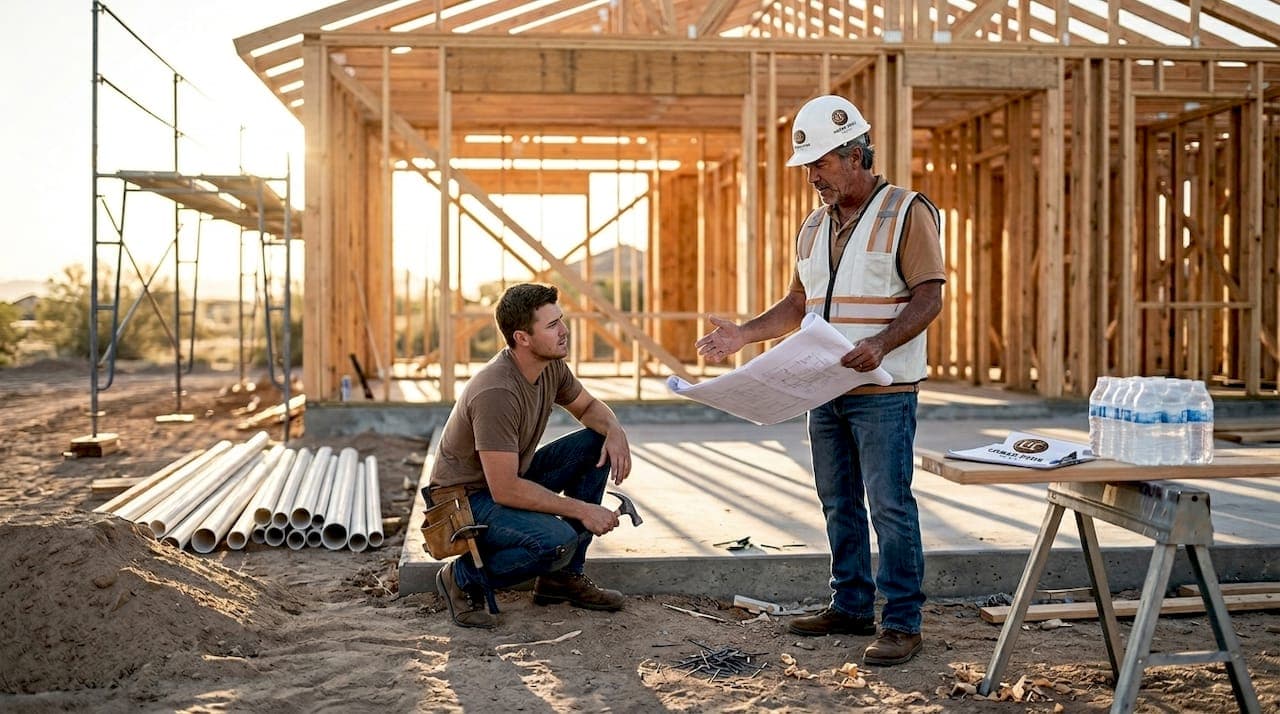
Most homeowners in the West Valley treat "building" and "remodeling" as interchangeable words, but they are two very different animals in Arizona's construction landscape. From Buckeye's expanding subdivisions to Goodyear's growing neighborhoods, residential construction follows a specific sequence of steps, permits, and codes that catch unprepared homeowners off guard. Skip one stage or miss a permit, and you're looking at fines, delays, or worse, safety issues that show up years later. This guide breaks down exactly what residential construction means, how it unfolds locally, how it compares to remodeling, what methods are trending in 2026, and what you need to know before you sign any contract or pour a single yard of concrete.
Table of Contents
- What defines residential construction?
- Understanding the stages of residential construction
- Permits, codes, and local requirements: What Arizona homeowners must know
- Remodeling vs. new construction: Processes, risks, and ROI
- Popular construction methods and trends in 2026
- A contractor's perspective: What homeowners often overlook in residential construction
- Ready to start your West Valley project? Urban Edge can help
- Frequently asked questions
Key Takeaways
| Point | Details |
|---|---|
| What residential construction includes | Residential construction covers everything from new homes to remodels and additions, all designed for safe and comfortable living. |
| Arizona-specific process and codes | Arizona projects often use slab foundations and require multiple permits, following local building codes for safety and compliance. |
| Choosing the best method | Stick-built and modular methods each offer pros and cons, with local conditions and builder expertise guiding the best choice. |
| Remodeling vs. new builds | Remodeling includes unique risks due to existing conditions, but both pathways can add significant value when managed well. |
| Importance of ROI-driven upgrades | Investing in curb appeal and energy efficiency upgrades drives the greatest return for homeowners in the West Valley. |
What defines residential construction?
Not every building project qualifies as residential construction, and the distinction matters more than most people realize. Residential construction refers to building, renovating, or modifying structures primarily intended for people to live in, such as single-family homes, townhomes, apartments, and condos, focusing on safe, functional, and aesthetically pleasing living spaces. Commercial construction follows entirely different codes, timelines, and inspections. Knowing which category your project falls into shapes every decision that follows.
In Arizona's West Valley, residential construction takes on some unique characteristics. The heat drives design choices, from roof materials rated for extreme UV exposure to insulation requirements far exceeding what you'd find in Minnesota. The rapid population growth in cities like Goodyear, Buckeye, and Avondale means contractors here are handling a wide variety of project types simultaneously.
Here are the most common types of residential construction projects in the West Valley:
- New single-family home builds on vacant lots or subdivisions
- Whole-home remodels updating kitchens, baths, and living areas
- Room additions expanding square footage for growing families
- Accessory Dwelling Units (ADUs) built on existing residential lots
- Townhome and multi-unit residential construction for investors
- Garage conversions and covered patio additions
Each project type carries its own permitting requirements, structural considerations, and budget range. An ADU in Goodyear, for example, must meet both state and municipal zoning rules before a shovel goes in the ground.
"The difference between residential and commercial construction isn't just the end user. It's the codes, the materials, the inspection frequency, and the liability structure. Treating them the same is a costly mistake."
Residential projects also put a premium on livability. Unlike commercial builds where function often overrides aesthetics, your home needs to feel right, not just stand correctly. Layout flow, natural light, material finishes, and energy performance all factor into a successful residential project. That's why experienced general contracting in Arizona goes well beyond hammering nails. It means coordinating trades, managing schedules, and keeping the vision intact from design to final walkthrough.
The West Valley is also seeing strong demand for energy-efficient residential builds, driven partly by the desert climate and partly by rising utility costs. Solar-ready designs, spray foam insulation, and low-E windows are no longer luxury upgrades here. They're becoming standard practice for homeowners who want manageable energy bills year-round.
Understanding the stages of residential construction
Knowing that a house gets "built" is one thing. Understanding each stage and why it matters is what separates homeowners who navigate the process confidently from those who feel blindsided at every turn.
A typical Arizona build moves through these stages in order:
- Site preparation - Clearing, grading, and utility connections
- Foundation - Slab-on-grade is standard in Arizona's dry, stable soil
- Framing - Wood or steel stud structure goes up
- Rough-ins (MEP) - Mechanical, electrical, and plumbing systems installed inside walls
- Insulation - Critical in Arizona for both heat and energy efficiency
- Drywall - Interior walls closed and finished
- Interior finishes - Flooring, cabinetry, paint, trim, fixtures
- Landscaping - Exterior grading, hardscape, desert-friendly plants
- Final inspections - Municipal sign-off on all systems before occupancy
MEP rough-ins (step 4) deserve special attention. This is when your plumber, electrician, and HVAC contractor run all their lines before the walls close. Once drywall goes up, accessing those systems costs serious money. Any errors caught after this point mean tearing open walls. This is why experienced contractors schedule multiple inspections during the rough-in phase, not just at the end.
| Stage | Typical duration | Estimated cost range (West Valley) |
|---|---|---|
| Site prep | 1 to 2 weeks | $5,000 to $15,000 |
| Foundation (slab) | 1 to 2 weeks | $8,000 to $20,000 |
| Framing | 2 to 4 weeks | $25,000 to $60,000 |
| MEP rough-ins | 2 to 4 weeks | $30,000 to $70,000 |
| Insulation and drywall | 2 to 3 weeks | $12,000 to $30,000 |
| Interior finishes | 4 to 8 weeks | $40,000 to $120,000 |
| Landscaping | 1 to 2 weeks | $5,000 to $25,000 |
| Final inspections | 1 to 2 weeks | Included in permit fees |
Pro Tip: Arizona's summer heat can slow framing and exterior work dramatically. If you're planning a custom home build, aim to break ground in October or November so the structural phases wrap up before peak summer heat arrives. Supply chain delays on lumber and windows have also stretched timelines in 2026, so build buffer time into your schedule from day one.
Permits, codes, and local requirements: What Arizona homeowners must know
Permits aren't bureaucratic red tape. They're your legal protection. In the West Valley, slab foundations are standard due to Arizona's soil composition and dry climate, and all structural, electrical, and plumbing work requires permits governed by codes like the Phoenix Building Construction Code, which adopted 2024 IRC and IBC standards with local amendments for cities including Goodyear and Buckeye.
Here's what Arizona homeowners in the West Valley must pull permits for:
- Structural work - Any addition, wall removal, or new framing
- Electrical - Panel upgrades, new circuits, EV charger installation
- Plumbing - New lines, water heater replacement, sewer connections
- HVAC - New unit installation or duct system modifications
- Pools and spas - Separate permit category with strict fence and safety codes
- ADUs - Full permit package including zoning approval
Skipping permits carries real consequences. Insurance companies can deny claims on unpermitted work. When you sell your home, buyers' inspectors flag unpermitted additions, which can blow up a sale or force you to tear out work at your own expense. More importantly, unpermitted electrical or structural work is a genuine safety risk.
The residential construction sector is significant. Understanding local code compliance is not optional at any scale. Cities update their codes regularly, and what was acceptable five years ago may require an upgrade today, especially if you're adding square footage or converting a space.
For homeowners in Goodyear, Buckeye, or western Phoenix, the permit process typically starts with your city's community development or planning department. You submit drawings, pay fees, and wait for approval before work begins. A licensed contractor handles this for most homeowners, but knowing the steps protects you from contractors who suggest "skipping" permits to save time.
Code compliance also influences foundation choices. While slab-on-grade dominates the West Valley, elevated foundations or stem wall designs may be required on certain lot types. Your contractor and the city's building department work together to determine what's appropriate for your specific parcel. Staying informed about Arizona building codes early in planning saves significant rework later.
Remodeling vs. new construction: Processes, risks, and ROI
One of the most common questions West Valley homeowners ask is simple: should I remodel what I have or start fresh? The answer depends on your budget, your goals, and your tolerance for surprises.
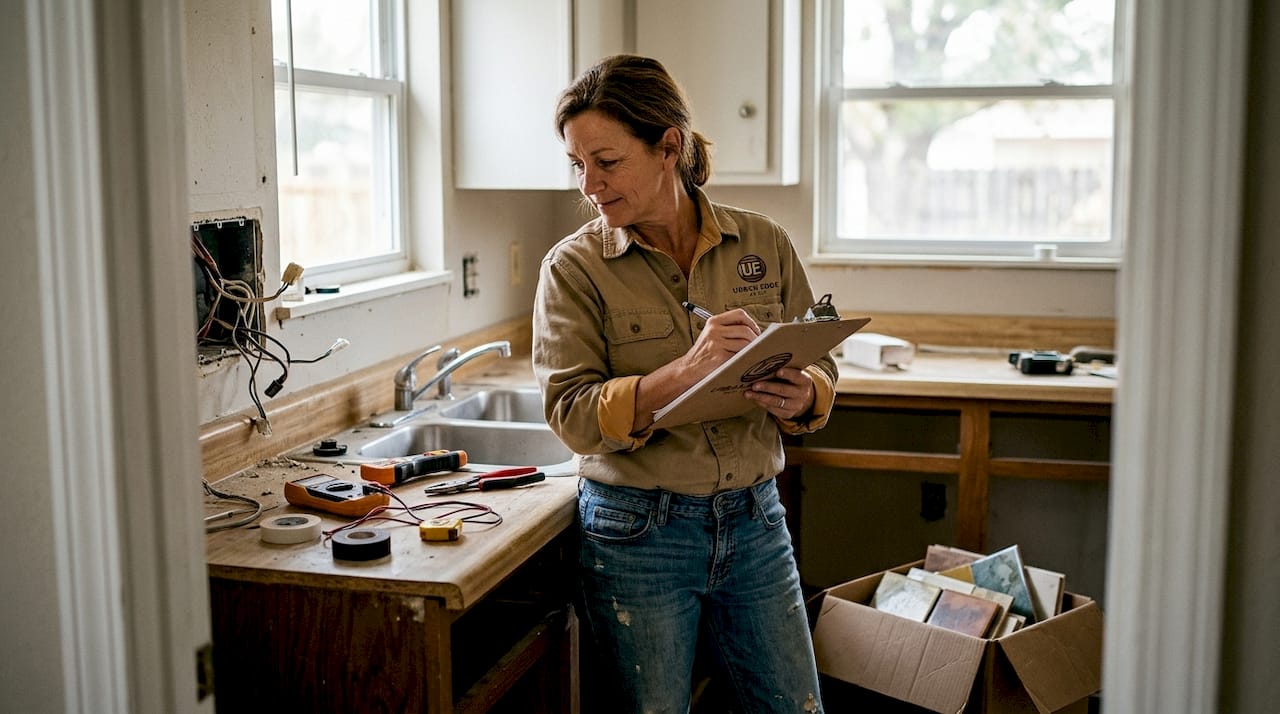
Remodeling involves similar stages to new construction but adds a critical first step: existing conditions assessment. Before any demo begins, a thorough inspection reveals what's hiding inside your walls. Older homes sometimes contain asbestos insulation, outdated knob-and-tube wiring, or undersized plumbing that won't support a modern bathroom layout.
| Factor | New construction | Remodeling |
|---|---|---|
| Starting point | Blank lot | Existing structure |
| Predictability | High | Moderate to low |
| Cost control | Easier to estimate | Can vary significantly |
| Timeline | 6 to 14 months | 2 to 8 months |
| Permit complexity | Standard | Varies by scope |
| Hidden surprises | Rare | Common |
| Customization | Full control | Limited by structure |
Top risks for new construction:
- Cost overruns from material price increases mid-project
- Lot-specific surprises like caliche rock layers requiring extra excavation
- Permit delays from city backlogs
- Subcontractor scheduling gaps that extend timelines
Top risks for remodeling:
- Discovery of hazardous materials requiring remediation
- Structural deficiencies that must be corrected before proceeding
- Code upgrade requirements triggered by the scope of work
- Hidden water damage from old plumbing or roof leaks
For ROI, not every upgrade pays off equally. In Arizona, curb appeal improvements and energy efficiency upgrades consistently deliver stronger returns than high-end interior finishes in mid-range neighborhoods. A $15,000 kitchen remodel in a Buckeye neighborhood where comparable homes sell for $350,000 will return more than a $50,000 overhaul. Knowing your neighborhood's ceiling matters. Our kitchen remodeling process guides homeowners through exactly this kind of value-focused planning so you invest where it counts.
Popular construction methods and trends in 2026
Once you've decided on new construction or a remodel, the next choice is how it gets built. Two methods dominate the residential market, and each has real advantages depending on your timeline, budget, and site.
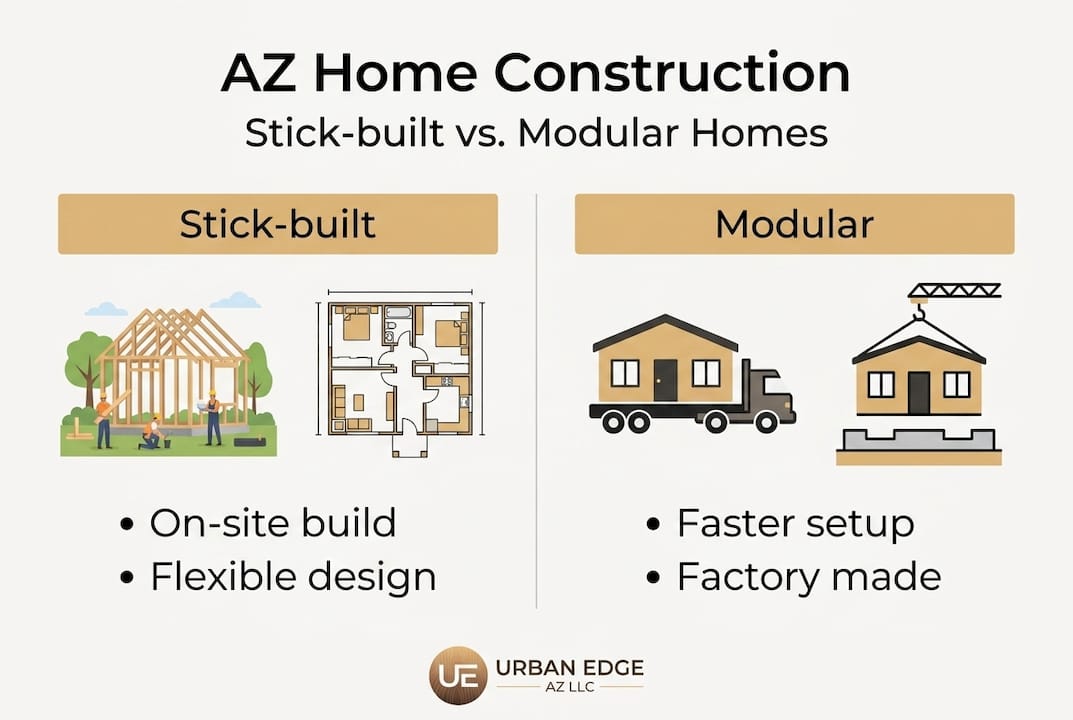
Stick-built construction uses dimensional lumber assembled on-site, piece by piece. It's been the standard in American homebuilding for generations. The West Valley primarily uses stick-built framing because local contractors know it well, materials are readily available, and it adapts easily to custom layouts. Stick-built remains dominant in most U.S. markets, while modular and prefab construction is gaining traction for efficiency-focused projects.
Modular construction assembles major sections of the home in a factory, then ships them to the site for final assembly. It's faster once materials arrive, but it requires contractors with specific experience and equipment. Not every West Valley contractor works with modular systems, so sourcing the right team takes extra effort.
Top construction trends shaping the West Valley in 2026:
- Energy-efficient building envelopes with advanced insulation and low-E glass
- Smart home pre-wiring built into framing stages for automation and security
- Desert-adapted landscaping designed into construction plans from the start
- ADU construction increasing as homeowners look for rental income or multigenerational living
- Solar-ready roofing included in standard construction packages
- Sustainable material sourcing with recycled content and low-VOC products
The residential construction market is projected to reach $6,243 billion globally by 2030 at a 7.1% CAGR, reflecting how much demand is accelerating. Locally, construction costs in the West Valley run between $150 and $300 per square foot for residential builds, which tracks with national averages but can climb quickly when custom finishes or complex site conditions are involved.
Pro Tip: If your lot has unusual topography, like a slope or proximity to a wash, stick-built gives contractors more flexibility to adapt the design on-site. Modular works best on flat, straightforward lots where the factory design doesn't need field modifications.
A contractor's perspective: What homeowners often overlook in residential construction
After working on projects across Goodyear, Buckeye, and the broader West Valley, the pattern we see most often is this: homeowners focus almost entirely on the finish line and underestimate the foundation, literally and figuratively.
The most expensive mistakes we witness aren't dramatic. They're decisions that felt reasonable at the time. Choosing the lowest bid without verifying the contractor's permit history. Skipping the design phase to save money, then paying twice as much to redo layout decisions mid-build. Selecting upgrades based on trends instead of neighborhood ROI data. As noted in construction planning research, curb appeal and energy upgrades consistently outperform interior luxury finishes in measurable resale value, yet most homeowners spend their biggest dollars inside.
Here's the contrarian truth: compliance and design matter more than any individual material upgrade. A beautifully tiled bathroom in a home with unpermitted electrical work is a liability, not an asset. And a thoughtfully designed floor plan that flows well will outlast any countertop trend by decades.
We also see homeowners skip the vetting process for contractors, especially on smaller projects. A handyman job that gets botched can cascade into structural or water damage that costs far more to fix. Learning to spot contractor red flags before signing is one of the highest-value steps you can take. Unlicensed work, vague contracts, and pressure to skip permits are warning signs that should send you looking elsewhere, regardless of price.
Value in residential construction isn't found in the cheapest square foot. It's built into every decision made before the first nail goes in.
Ready to start your West Valley project? Urban Edge can help
If this guide has clarified what you're up against and what's possible, the next step is talking to a team that already knows your neighborhood, your permit office, and your climate.
Urban Edge LLC serves homeowners across Goodyear, Buckeye, and the greater West Valley with residential construction and remodeling services built around transparency, craftsmanship, and code compliance. Whether you're exploring a full custom build, a targeted renovation, or something in between, our team handles permitting, design coordination, and project management from start to finish. Our kitchen remodeling experts and custom home builders bring the local knowledge that out-of-state contractors simply can't match. Book a consultation today and find out exactly what your project will take, with no surprises and no pressure.
Frequently asked questions
What are the main steps in residential construction in Arizona?
Key stages in Arizona construction include site prep, slab foundation, framing, MEP rough-ins, insulation, drywall, interior finishes, landscaping, and final city inspections before occupancy is granted.
What types of permits are required for home projects in the West Valley?
Permits are required for structural, electrical, and plumbing work, and all projects must comply with the Phoenix Building Construction Code and local municipal amendments in cities like Goodyear and Buckeye.
How does remodeling differ from new construction?
Remodeling starts with an existing structure assessment and frequently uncovers hidden conditions like outdated wiring or water damage, while new construction offers more predictable steps starting from a blank lot.
Which construction method is better: stick-built or modular?
Stick-built is traditional and widely used in the West Valley for its flexibility, while modular is faster but requires experienced builders and works best on straightforward, flat sites.
What home upgrades offer the highest ROI in Arizona?
Curb appeal and energy efficiency upgrades consistently deliver the best return on investment in Arizona, outperforming high-end interior finishes in most mid-range West Valley neighborhoods.
Recommended
- Urban Edge LLC — General Contracting & Construction
- Urban Edge LLC | Premier General Contracting in AZ
- 15 Critical Red Flags When Hiring a Contractor | Urban Edge LLC
- Project Gallery | Urban Edge LLC
- Almost Half Put Off Home Renovations For Lack Of Reliable Builders
- Step-by-step travertine tiling: A DIY guide for homeowners– SurfacesGalore