
TL;DR:
- Homeowners should understand that contractors are responsible for managing budgets, permits, subcontractors, and project risks. They serve as the central point of accountability, overseeing every aspect of construction from planning to project closeout. Hiring a licensed, insured contractor and maintaining clear communication significantly reduces the chances of costly mistakes or delays in home projects.
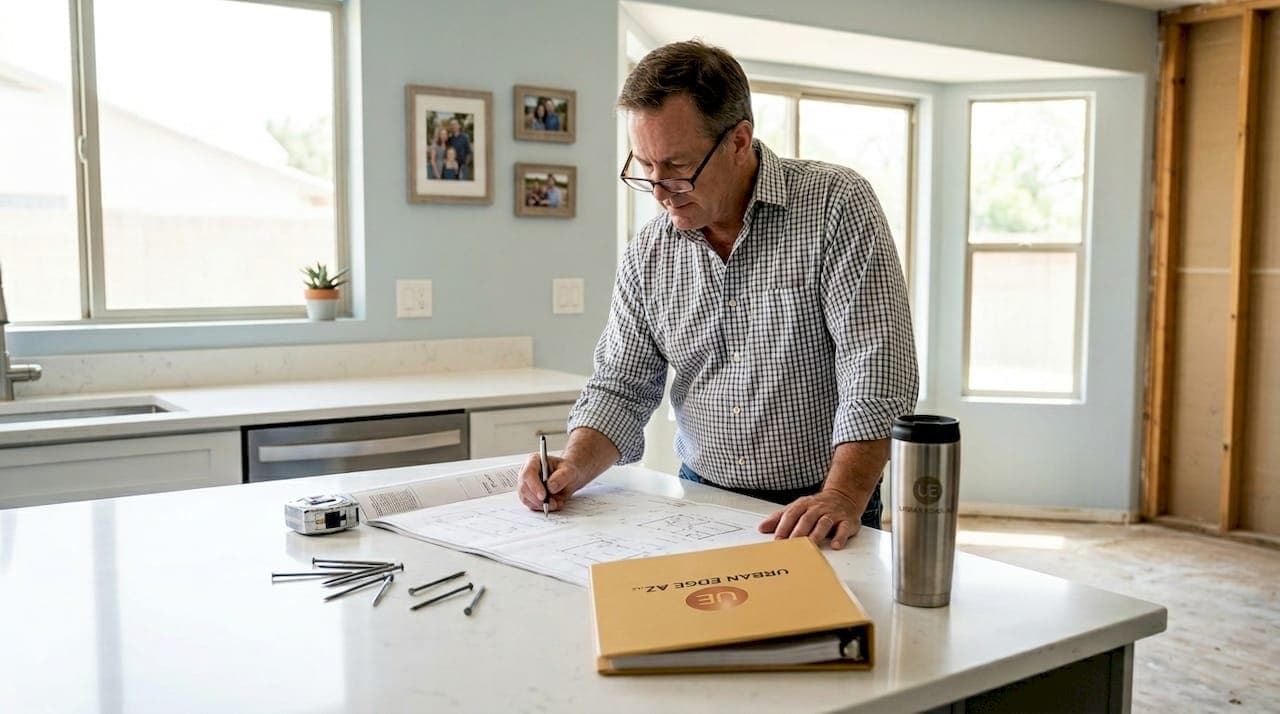
Most homeowners picture a contractor standing on a job site with a hard hat, pointing at things. The reality is far more demanding. Understanding what does a contractor do means recognizing that they are the single point of accountability for your entire project. They manage budgets, negotiate material costs, pull permits, hire and supervise specialized tradespeople, and carry the legal and financial risk if anything goes wrong. This guide breaks down every layer of that role so you can hire smarter, communicate better, and avoid the costly surprises that derail too many home projects.
Table of Contents
- Key Takeaways
- What does a contractor do on a construction project
- Contractor vs. subcontractor: who does what
- Contractors vs. employees: why the difference matters
- How to hire and work with a contractor effectively
- The risk management role most homeowners overlook
- My take after years of watching projects succeed and fail
- Work with a contractor who takes accountability seriously
- FAQ
Key Takeaways
| Point | Details |
|---|---|
| Contractors run the whole project | They handle planning, permits, materials, subcontractors, and inspections from start to finish. |
| General contractors vs. subcontractors | General contractors hold the prime contract and assume all financial risk; subcontractors handle specific trades. |
| Contractors are independent businesses | They pay their own taxes, carry their own insurance, and control their own work methods. |
| Hiring right protects your investment | Verifying licenses, insurance, and references before signing prevents legal and financial exposure. |
| Risk management is their core function | Contractors protect homeowners from liability, safety violations, and supply chain failures. |
What does a contractor do on a construction project
The short answer is: everything that holds the project together. But that answer deserves unpacking, because the daily reality of contractor job responsibilities is far more layered than most homeowners expect.
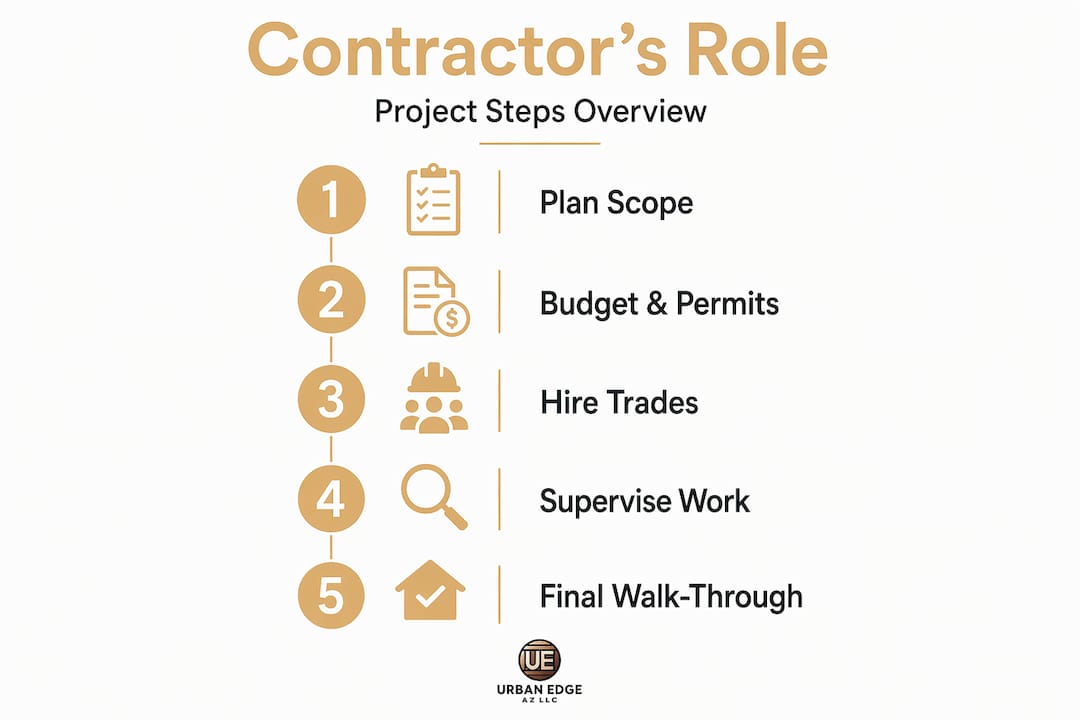
Before a single nail goes into a wall, a contractor meets with you to assess your goals, your budget, and the physical constraints of your property. From that conversation, they build out a detailed project timeline and a line-item budget. These are not rough guesses. They reflect real material costs, labor rates, permit fees, and a calculated buffer for the unexpected. Contractor core duties include client meetings, timeline and budget creation, permit applications, material procurement, subcontractor supervision, and quality inspections.
The permit process alone stops many DIY projects cold. A licensed contractor knows which permits apply to your project, which inspections are required at each phase, and how to communicate with the local building department. Skipping this step does not just risk a fine. It can invalidate your homeowner's insurance and complicate a future property sale.
Here is what a contractor's day-to-day responsibilities typically cover:
- Project planning: Reviewing blueprints, writing scope-of-work documents, and setting realistic timelines based on trade availability and material lead times
- Budget management: Tracking costs against the approved budget, flagging overruns early, and managing contingency funds
- Permitting and compliance: Applying for all required permits and scheduling mandatory inspections with the local authority
- Material procurement: Sourcing and ordering materials, comparing supplier pricing, and timing deliveries to match the construction schedule
- Subcontractor coordination: Hiring licensed plumbers, electricians, roofers, and other specialists, then scheduling them to avoid costly overlap or downtime
- Safety oversight: Enforcing OSHA safety standards on the job site and maintaining a hazard-free environment for workers and residents
- Quality control: Conducting regular inspections throughout the build and addressing deficiencies before they become expensive problems
- Project closeout: Walking the completed project with you, resolving punch list items, and providing warranty documentation
Pro Tip: Ask your contractor to walk you through the permit requirements for your specific project before you sign the contract. A contractor who cannot answer this question confidently is a red flag.
Contractor vs. subcontractor: who does what
This distinction confuses homeowners more than almost anything else in construction. When you hire a general contractor for a kitchen remodel or a new build, you are not hiring every worker who shows up on site. You are hiring the person who hires everyone else.
General contractors hold the prime contract with property owners and assume financial and operational risk, while subcontractors hold contracts with the general contractor for specific trades. That structural difference has real consequences for you as a homeowner.

| Role | Contract relationship | Scope of work | Who carries the primary liability |
|---|---|---|---|
| General contractor | Direct contract with homeowner | Full project management, all trades | General contractor |
| Subcontractor | Contract with general contractor | Single trade (plumbing, electrical, HVAC, roofing) | Shared with general contractor |
| Construction manager | Advisory role, no construction contract | Budget oversight, design coordination | Owner |
When a plumber on your job site makes a mistake, your general contractor is the one accountable to you. They manage the subcontractor relationship, not you. This structure protects you from chasing multiple specialists if something goes wrong. It also means your general contractor needs to be selective and rigorous about who they hire. A weak subcontractor reflects directly on your project's outcome and your contractor's reputation.
Construction managers operate differently. They advise you on budget and design without physically building anything. They do not carry the same liability as a general contractor and are more common on large commercial or multimillion-dollar residential projects. For most homeowners undertaking a remodel or addition, a general contractor is the appropriate hire.
Understanding general contractor duties helps you ask better questions before signing anything and sets clear expectations about who answers to whom.
Contractors vs. employees: why the difference matters
People sometimes wonder whether to hire a contractor or bring someone on staff for ongoing work. The distinction goes well beyond job title.
Contractors operate as independent businesses controlling their own work, taxes, insurance, and expenses, while employees receive benefits and employer direction. Here is what that means in practice:
- Tax responsibility: A contractor invoices you and handles their own self-employment taxes. An employee has taxes withheld by the employer.
- Benefits: Employees receive health insurance, paid leave, and retirement contributions. Contractors receive none of these from the hiring party.
- Work control: An employer directs when, where, and how an employee works. A contractor controls their own methods and schedule, delivering an agreed result.
- Equipment and overhead: Contractors supply their own tools, vehicles, and insurance. Employees typically use employer-provided resources.
- Financial risk: A contractor absorbs their own business losses. An employee's income is protected by labor law.
This is not just academic. Mislabeling a worker as a contractor rather than an employee can have serious legal and financial consequences for businesses and workers alike. Courts look at the actual working relationship, not just the contract label.
Worth knowing: If you are hiring someone who works exclusively for you, uses your tools, and follows your daily direction, they may legally qualify as an employee regardless of what your paperwork says. Consult an employment attorney if you are unsure.
For most homeowners, this distinction matters when evaluating bids. A contractor's price is higher than a day laborer's rate for a reason. They are covering their own liability insurance, business taxes, and equipment costs. A cut-rate bid that skips those costs can leave you exposed when something goes wrong. The national average contractor rate sits at $25.10 per hour, though that varies significantly by specialty, location, and project complexity.
How to hire and work with a contractor effectively
Knowing what contractors do is only useful if you can translate that knowledge into a productive working relationship. Most homeowner horror stories trace back to one of two problems: hiring the wrong person or communicating poorly once work begins.
Follow these steps to protect yourself:
- Define your project scope first. Before you contact a single contractor, write down what you want done, your preferred timeline, and your firm budget ceiling. Vague requests produce vague bids.
- Get at least three competitive bids. Compare them line by line, not just total price. A low bid often means missing scope or low-quality materials.
- Verify licensing and insurance. In Arizona, contractors are required to hold a license through the Arizona Registrar of Contractors. Check their license status online before signing anything. Understanding contractor licensing in Arizona is one of the most important steps you can take before a project starts.
- Check references directly. Call past clients and ask specific questions: Did they finish on time? How did they handle problems? Would you hire them again?
- Read the contract carefully. A solid contract includes payment schedule, start and completion dates, a clear change order process, and what warranties apply to labor and materials.
- Know when to hire a handyman instead. Contractors are typically hired for large-scale projects requiring permits and multiple trades. A handyman is appropriate for smaller, isolated tasks that do not require complex coordination or regulatory compliance. For guidance on where that line falls in Arizona, handyman vs. contractor distinctions are worth reviewing before you book anyone.
- Set a communication protocol. Agree upfront on how often you will receive updates, who your point of contact is, and how change orders are approved. Put it in writing.
Pro Tip: Never pay more than 10% to 15% of the total project cost as a deposit. A contractor asking for 50% upfront before work begins is a sign of cash flow problems or worse.
The risk management role most homeowners overlook
Here is what separates a skilled general contractor from someone who can swing a hammer: their ability to manage risk on your behalf. Most homeowners focus on the visible work. The contractor is focused on the dozen ways that work can go wrong and how to prevent each one.
Managing financial and operational risk by verifying active subcontractor insurance and maintaining safety law compliance is a primary general contractor duty. If an uninsured subcontractor is injured on your property, and your contractor did not verify that insurance, the liability could fall on you.
The behind-the-scenes risk management work looks like this:
- Subcontractor insurance verification: Collecting and reviewing certificates of insurance from every specialty trade before they set foot on site
- Site safety enforcement: Maintaining compliance with OSHA standards, securing the site after hours, and running daily safety checks
- Material delivery scheduling: Timing material deliveries to prevent theft or damage is a real and often underestimated source of project loss when materials sit idle on site
- Change order management: Documenting every modification to the original plan, adjusting budgets transparently, and providing comprehensive handover documentation so nothing gets lost between phases
- Legal compliance: Confirming that every phase of construction passes inspection before the next phase begins, protecting you from code violations that surface during a future sale
The financial stakes are significant. A contractor who skips any of these steps can expose you to delays, liens from unpaid subcontractors, and liability for on-site accidents. Knowing this is what makes the difference between choosing a contractor based on price alone and choosing one based on demonstrated professional standards.
My take after years of watching projects succeed and fail
I've spent enough time around construction projects to spot the pattern that causes most homeowner regret. It almost never starts with bad craftsmanship. It starts with a homeowner who did not understand what they were buying.
When you hire a general contractor, you are not buying labor. You are buying project orchestration, risk management, and accountability. The physical work is almost secondary to the organizational work happening around it. I've seen beautifully installed tile in homes that later sold with open permits because no one confirmed the permit was closed out. I've seen homeowners pay twice to fix work that a contractor's subcontractor botched because the homeowner hired on price and skipped the reference check.
What I've learned is this: the most productive homeowner-contractor relationships share one quality. Both sides are clear about who owns each decision. The contractor manages the how. The homeowner owns the what and the why. When those boundaries blur, you get either a contractor who is constantly second-guessed and loses efficiency, or a homeowner who feels steamrolled and disconnected from their own project.
My practical advice is simple. Spend more time vetting before you hire than you think you need to. Read the contract as if you expect something to go wrong, because eventually something will. And when it does, a contractor who communicates clearly and owns their mistakes will matter far more than the one who had the lowest initial bid.
— Tucker
Work with a contractor who takes accountability seriously

Understanding what contractors do is step one. Choosing one who actually does all of it well is step two. Urbanedgeaz serves homeowners across Buckeye, Goodyear, and the greater Phoenix area with licensed, fully insured general contracting for new builds, remodels, and home additions. Every project includes transparent budgeting, scheduled inspections, verified subcontractors, and direct project management contact from start to finish. If you are planning a renovation or new construction project in the West Valley, you can learn more about their approach and request a free consultation to discuss your project scope and budget.
FAQ
What does a contractor do that a handyman cannot?
A contractor manages multi-trade projects that require permits, licensed subcontractors, and regulatory compliance. A handyman handles smaller, isolated repairs that do not require coordination across multiple systems or building code oversight.
What is the difference between a general contractor and a subcontractor?
A general contractor holds the prime contract with the homeowner and manages the full project, including all risk and liability. A subcontractor works under the general contractor and performs a specific trade such as electrical, plumbing, or roofing.
How do contractors charge for their work?
Contractors typically charge a percentage of total project cost, a fixed bid price, or a time-and-materials rate. The national average hourly rate is approximately $25.10, though rates vary by specialty, location, and project complexity.
Do I need a licensed contractor for a home renovation?
Most renovation work that involves structural changes, electrical, plumbing, or new construction requires a licensed contractor and permits in Arizona. Working without a license or permits can void your homeowner's insurance and create problems when you sell the property.
What should a contractor's contract include?
A solid contract should include a detailed scope of work, payment schedule with milestone-based installments, project timeline, a defined change order process, and warranty terms for both labor and materials.